
Last verified: 2026-10-04 13:23 KST
On 1 October 2026 a Korean YouTube channel called 해외감동오픈 posted a 30-minute video about nine old Korean goods. Its description says they are taking off again in the United States: the tiger mink blanket, the kimjang vest, Korean hiking clothes, the sun visor, the homi, onggi jars, the dolsot, bojagi and the gat. When we checked on 4 October it had about 160,000 views.
If you live in Korea, that list turns into three plain questions. Is the buzz abroad real? Where do you buy the thing here, and for how much? How do you get it home? On 4 October 2026 we checked each item against press reports, official pages and live price listings. We did not use the video as a source. We could not read its subtitles, so this guide refers only to its title and description. The honest result: two of the nine have a sales number behind them, and both numbers come from one 2019 magazine article. For a third, the tiger blanket, that article gives only a claim of heavy demand. For the other six we found no independent evidence of demand abroad. That does not make them bad things to buy.
The nine, side by side
| Item | Evidence of demand abroad | Where to buy in Korea; search words | Listed online, 4 Oct 2026 |
|---|---|---|---|
| 1. Tiger mink blanket | Weak: one 2019 report, no sales number | Market bedding shops, online. 밍크담요, 호랑이 담요 | 18,560–64,400 won; median about 31,600 |
| 2. Kimjang vest | A trend inside Korea (January 2026); nothing on sales abroad | Traditional markets, online. 김장조끼, 꽃무늬 누빔조끼 | About 1,500–25,800 won, median about 10,700; one outlier at 126,720 |
| 3. Hiking clothes | None for the clothes | Outdoor stores and outlets; rental in Seoul. 등산복 매장, 아웃도어 아울렛 | Not checked |
| 4. Sun visor | None for sales | Market hat stalls, online. 썬캡, 썬캡 UPF50+ | Listings saying only “UV protection”: 1,840–70,540 won; listings with a UPF number: 3,610–62,460 won |
| 5. Homi | Strongest: more than 2,000 sold on Amazon (2019 report; a second news report gives a similar number) | Hardware and farm-supply shops, online. 삼각호미, 조선호미 | Ordinary about 3,000–8,000 won; Yeongju brand mostly 8,000–15,500 won |
| 6. Onggi | None found | Oegosan Onggi Village in Ulsan, online. 옹기 항아리, 장독 | 4 L 15,820–22,670 won; 24 L 59,220 won; 65 L 114,080 won |
| 7. Dolsot | Weak: about 6,000 sold in a year (same 2019 report, no second source) | Kitchenware shops, online. 돌솥, 곱돌솥 | Natural-stone pots: mostly 22,270–53,500 won; larger or premium ones about 99,000–225,000 won |
| 8. Bojagi | None found | Online. 보자기 포장, 조각보 | Varies widely; one 150 by 150 cm example 13,920 won |
| 9. Gat | None for the hat itself | No craft seller confirmed; costume hats online. 갓 전통모자, 흑립 | 2,140–63,420 won, mostly costume and prop hats; none clearly hand-woven |
Prices are the figures displayed on Danawa price-comparison search results, not on the sellers’ own pages, and they move with delivery fees and options.
1. Tiger mink blanket: there is no mink in it
The thick, plush blanket with a tiger across it is a mingkeu damnyo (밍크담요). The “mink” is a feel, not a fur. One Korean marketplace listing we opened is named 밍크감촉 20mm 극세사 대형 담요, or mink-touch 20 mm microfiber large blanket. It started at 29,900 won and gave China as the country of manufacture. If origin matters to you, look for the 제조국 (country of manufacture) line.
The evidence for demand abroad is one article. Vogue Korea reported on 12 March 2019 that the blanket cost around 10,000 won in Korea, sold for up to ten times that on Amazon and was always out of stock. It gave no sales number, and we found nothing independent for 2026. The 10,000 won price is gone too. Listings on 4 October 2026 showed tiger-pattern blankets at roughly 18,560 to 64,400 won, with a median near 31,600. Search for 밍크담요 or 호랑이 담요 (horangi damnyo).
In person, try the bedding shops in traditional markets. Seoul’s official tourism site lists quilts and fabrics among the goods at Dongdaemun Shopping Complex, by exit 9 of Dongdaemun Station. That page does not mention this blanket, so treat it as a place to look, not a promise.
We could not confirm how to wash it, what it weighs, or whether it is safe on top of an electric heating mat. On the listing we opened, the specifications sit inside images, so a page translator skips them. Check the blanket’s label and your mat’s manual. Our winter guide covers floor heating and what electric bedding does to your bill.
2. Kimjang vest: where the 6.3 million won came from
A kimjang vest (김장조끼, gimjang jokki) is not an apron. The Korea Times describes it as a “floral, quilted gilet”, and Hankyung traces the name to the quilted vests that grandmothers wore for warmth in kimjang season. Kimjang is the making and sharing of kimchi, which UNESCO inscribed in 2013; its page puts the season in late autumn. We found no source that calls the vest waterproof.
The chapter list in the video’s description puts a figure of 6.3 million won next to the vest. In the Korea Times article of 23 January 2026, that number is the price of a floral vest from an Italian luxury brand, and YTN gave the same figure that day. A second luxury label’s reversible down vest was 2.33 million won. The market version in the same article costs 5,000 to 10,000 won. The article reports a trend inside Korea, not sales abroad.
Listings on 4 October 2026 ran from about 1,500 to 25,800 won, with a median near 10,700 won and most between 5,000 and 17,500 won. One listing, at 126,720 won, sat far above the rest. Search for 김장조끼 or 꽃무늬 누빔조끼 (kkonmunui nubim jokki, floral quilted vest), or look in a traditional market. Korean sizes run small, and a cash purchase at a stall is final in practice, so try it on first. The sizes section of our budget shopping guide has workarounds.
3. Hiking clothes: the hiking is documented, the clothes are not
We found no source showing that Korean hiking clothes sell or trend abroad. What the press documents is foreigners hiking in Korea. Hankyung reported in May 2026, citing Korea National Park Service data, about 2.05 million foreign visitors to national parks in the previous year: 1,131,483 inbound tourists and 919,414 foreigners who live here. Herald Economy gave the same totals in March 2026.
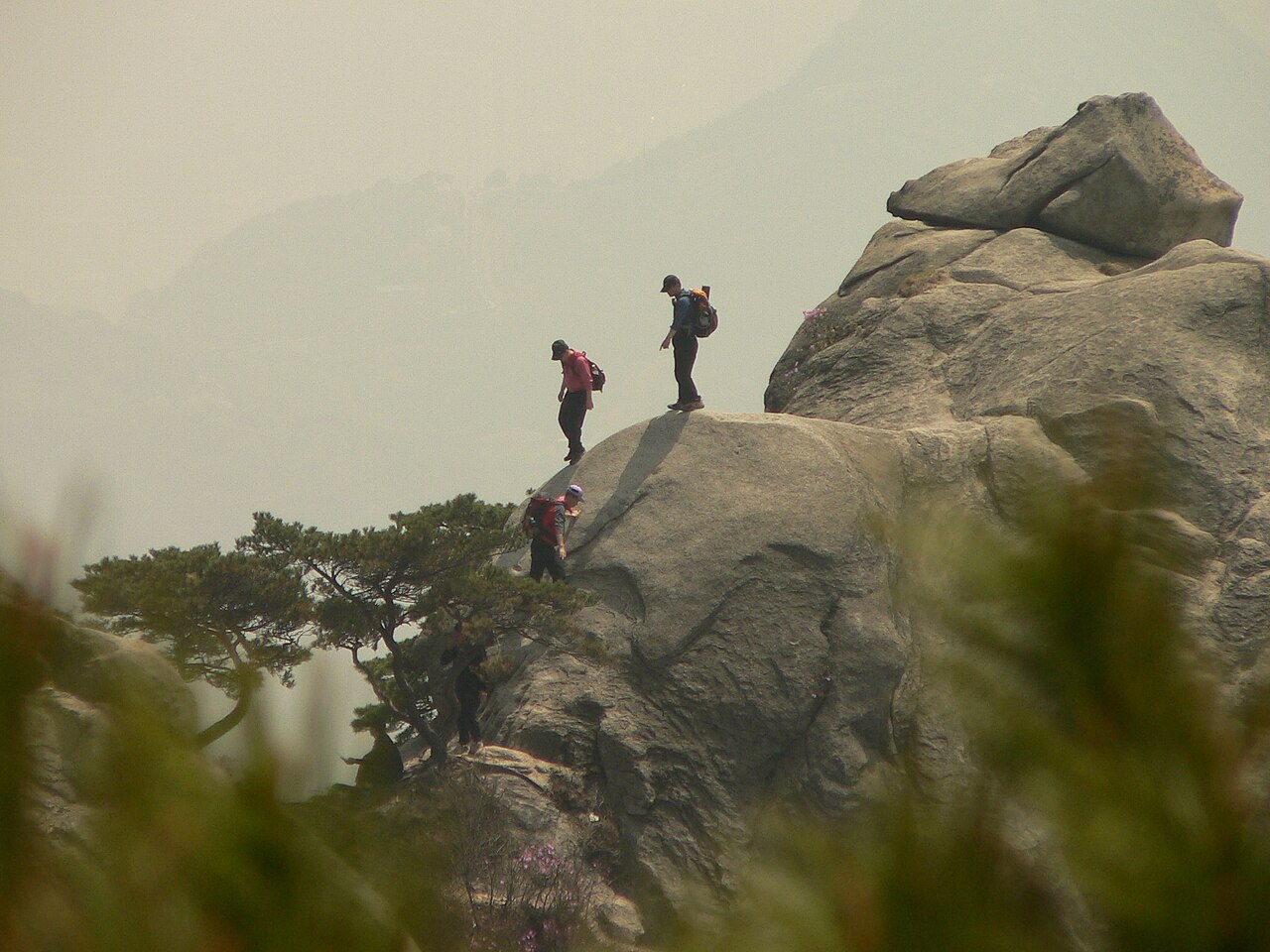
You do not need a full outfit to try a mountain. The Seoul Hiking Tourism Center branch at Gwanaksan rents backpacks, hiking shoes, tops, trousers, gloves and poles to foreign hikers. Its English leaflet says prices are “affordable” and gives no amount, so do not assume it is free. The branch is at 23 Sillim-ro, Gwanak-gu, at exit 1 of Gwanaksan Station on the Sillim Line. It opens from 09:00 to 18:00. The leaflet says it closes one day a week and on the Seollal and Chuseok holidays, and we found no reliable single weekday, so check before you go. Book at www.seoulhiking.or.kr.
To buy, search a map app for 등산복 매장 (deungsanbok maejang, hiking clothes store) or 아웃도어 아울렛 (outdoor outlet), and add 이월상품 (iwol sangpum) for last season’s stock. We opened no price listing and confirmed no brand’s store page, so we give no price and name no brand.
4. The sun visor: “UV protection” is not a UPF number
The wide visor is sold as a 썬캡 (sseonkaep). NBC News describes sun visors as part of a light-hearted stereotype of middle-aged Korean women, the ajumma. That shows the visor is recognised in the United States, not that it sells there.
What we did find is a labelling gap. UPF rates how much ultraviolet light a fabric lets through. According to the Skin Cancer Foundation, UPF 50 fabric blocks 98 percent. On 4 October 2026 we searched a price-comparison site for 썬캡 자외선차단 (sun cap, UV protection). On the first page of 40 listings, the letters UPF did not appear once. Listings that state a number showed up when we searched 썬캡 UPF50+.
Price does not sort this out. The 40 “UV protection” listings cost 1,840 to 70,540 won, with a median near 8,100 won. The 40 listings that carried a UPF number cost 3,610 to 62,460 won, with a median near 12,100 won. Labelled visors tended to cost more, but the ranges overlap heavily, so a high price does not prove a high UPF. Wide or face-covering styles (와이드 썬캡) ran from 2,660 to 35,090 won. We read listing titles only and checked no test report. The Skin Cancer Foundation also recommends a brim of at least 3 inches that shades the face, scalp and neck. A visor has no crown, so judge it by that.
5. Homi: the best-supported claim
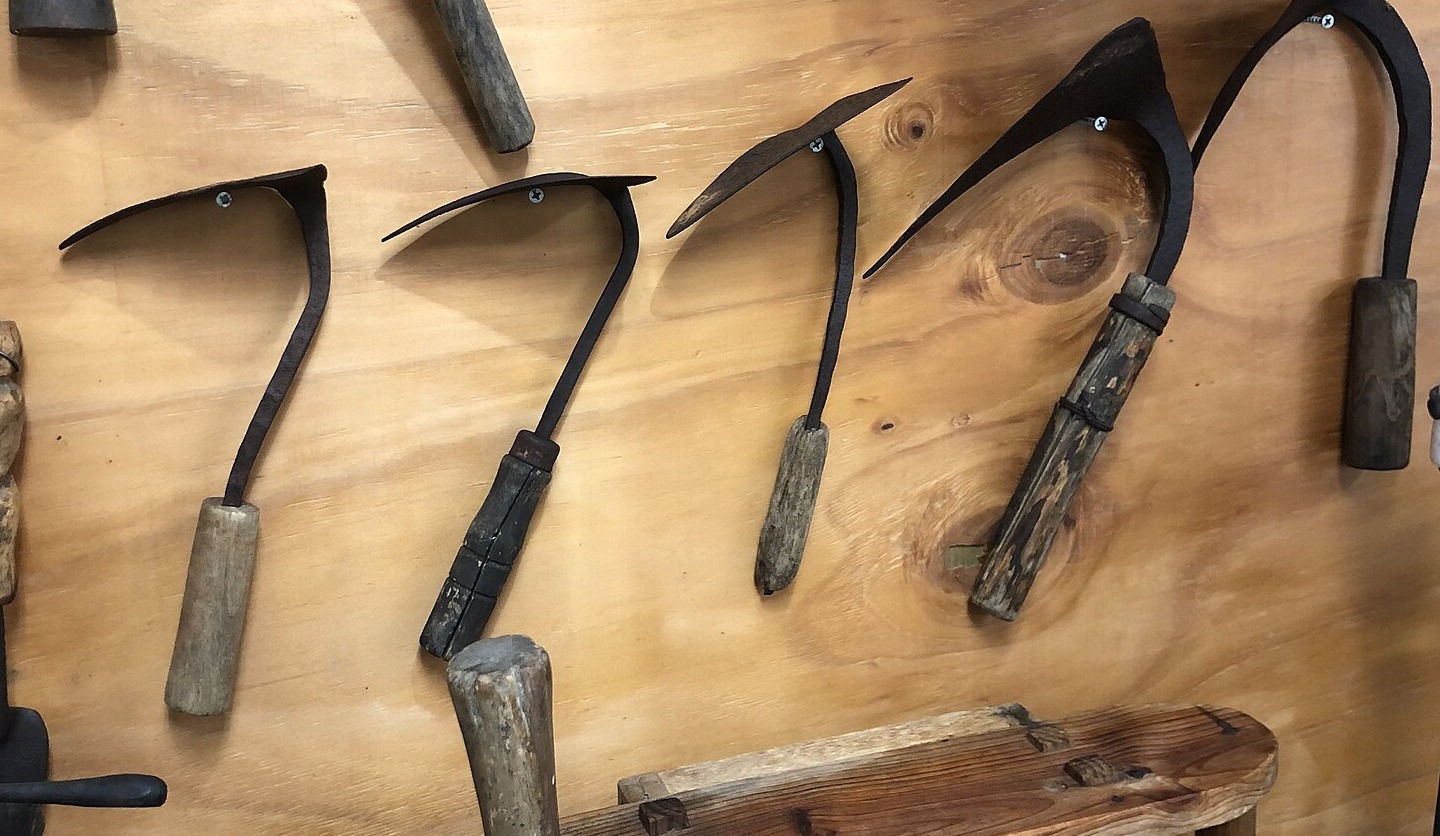
A homi (호미) is the Korean hand hoe: a curved, pointed iron blade on a short wooden handle.
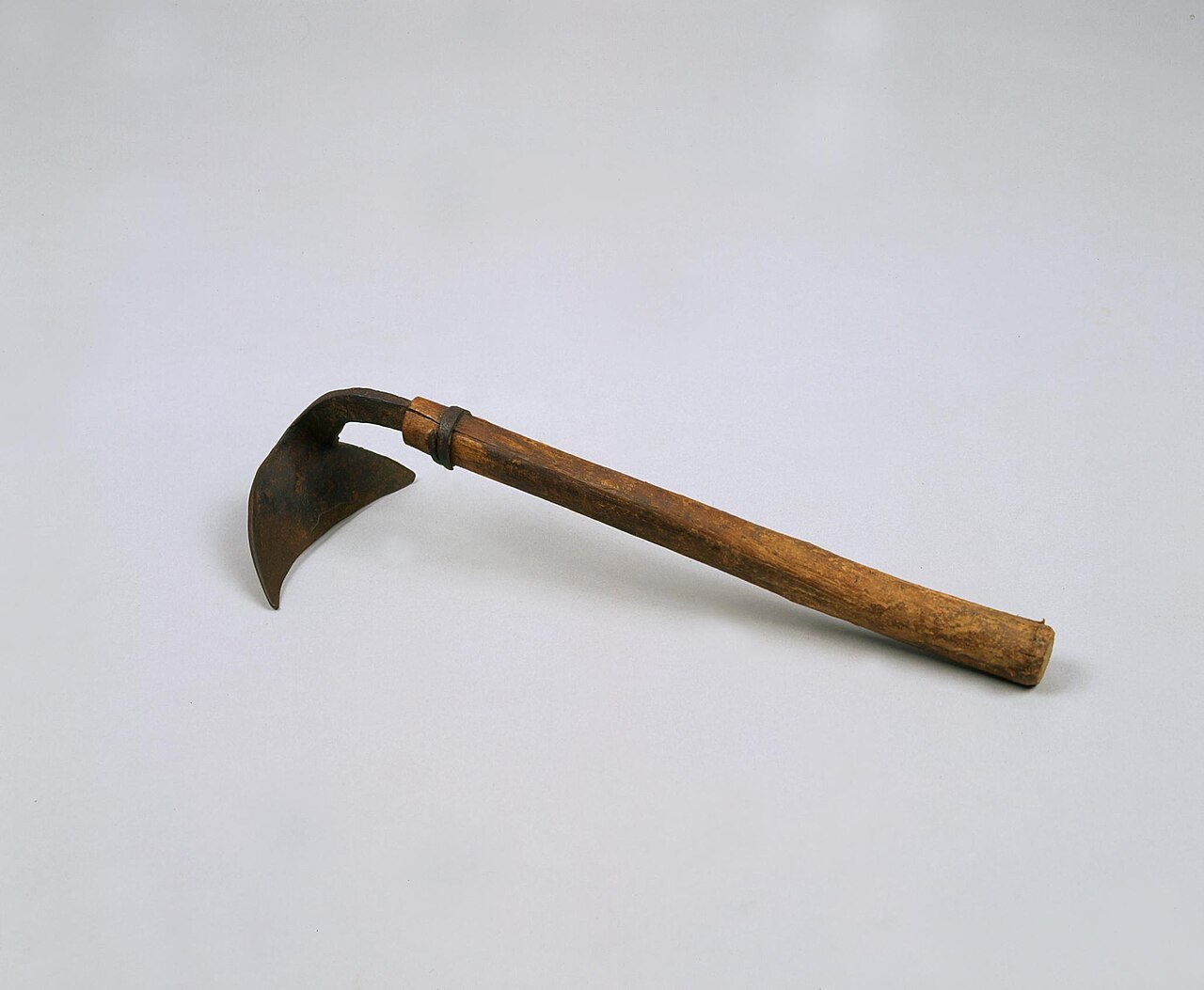
The same Vogue Korea article reported that more than 2,000 homi from a blacksmith workshop in Yeongju, North Gyeongsang Province, sold on Amazon the year before, enough for the top 10 in gardening. That is the best-supported sales figure we found for any of the nine, because a second report gives a similar number, though its timing is shaky: a Korean news report of 28 March 2019 places about 2,000 in the first months of 2019 instead, without saying how many went through Amazon. We did not check Amazon ourselves, and the number says nothing about today.
Online listings on 4 October 2026 showed an ordinary hand homi at about 3,000 to 8,000 won, and listings under the Yeongju workshop’s brand mostly at 8,000 to 15,500 won, though some cheaper resold items turn up under that name too. The same day an Australian tool retailer listed a large homi from that workshop at AU$40. Compare those numbers before you order one from abroad.
The search word matters. 호미 alone also returns long-handled tools. For the hand tool, search 삼각호미 (samgak homi) or 조선호미 (joseon homi). A 선호미 (seonhomi) has a long handle for working standing up, so it is a different tool. 영주대장간 호미 brings up the Yeongju brand. In person, try a hardware store (철물점, cheolmuljeom) or a farm-supply shop. Flying with one is covered below.
6. Onggi: read the litres, not the size number
Onggi (옹기) is Korean earthenware: the dark brown lidded jars that stand in rows on a jar terrace, or jangdokdae. Making them, Onggijang, has been a national intangible heritage (국가무형유산) since 1990, according to the national heritage portal.
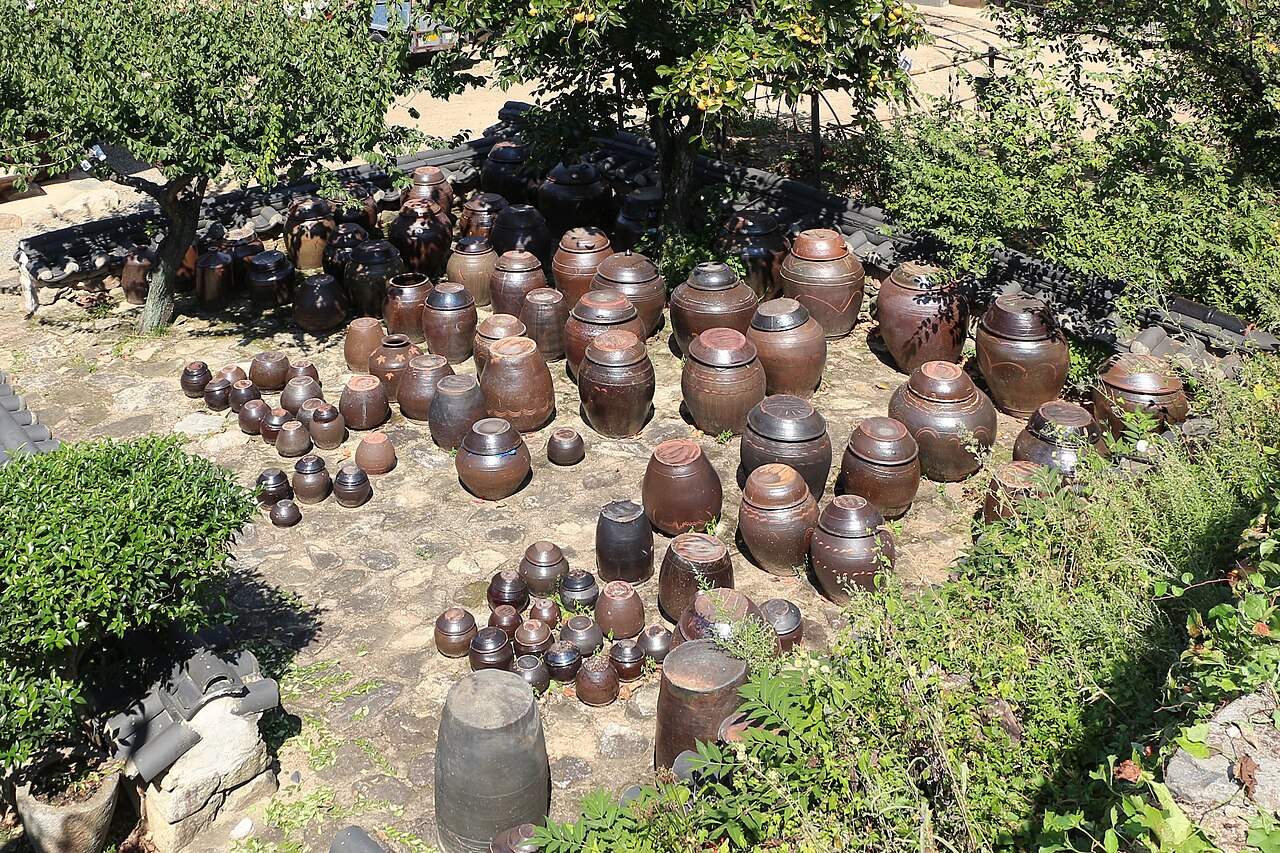
The trap online is the size label. Jars are sold by ho (호), a size number, and brands do not share one scale. In listings on 4 October 2026, one seller’s 4호 held 24 litres and another’s 7호 held 15 litres. Read the litres. That day a 4-litre jar was listed at 15,820 to 22,670 won, 12 litres at 35,720 won, 24 litres at 59,220 won and 65 litres at 114,080 won. Search for 옹기 항아리 (onggi hangari), 장독 (jangdok) or 숨쉬는 항아리 (sumswineun hangari, “breathing jar”). The same results mix food jars with ornaments and plant pots, so check that the listing says the jar is for food.
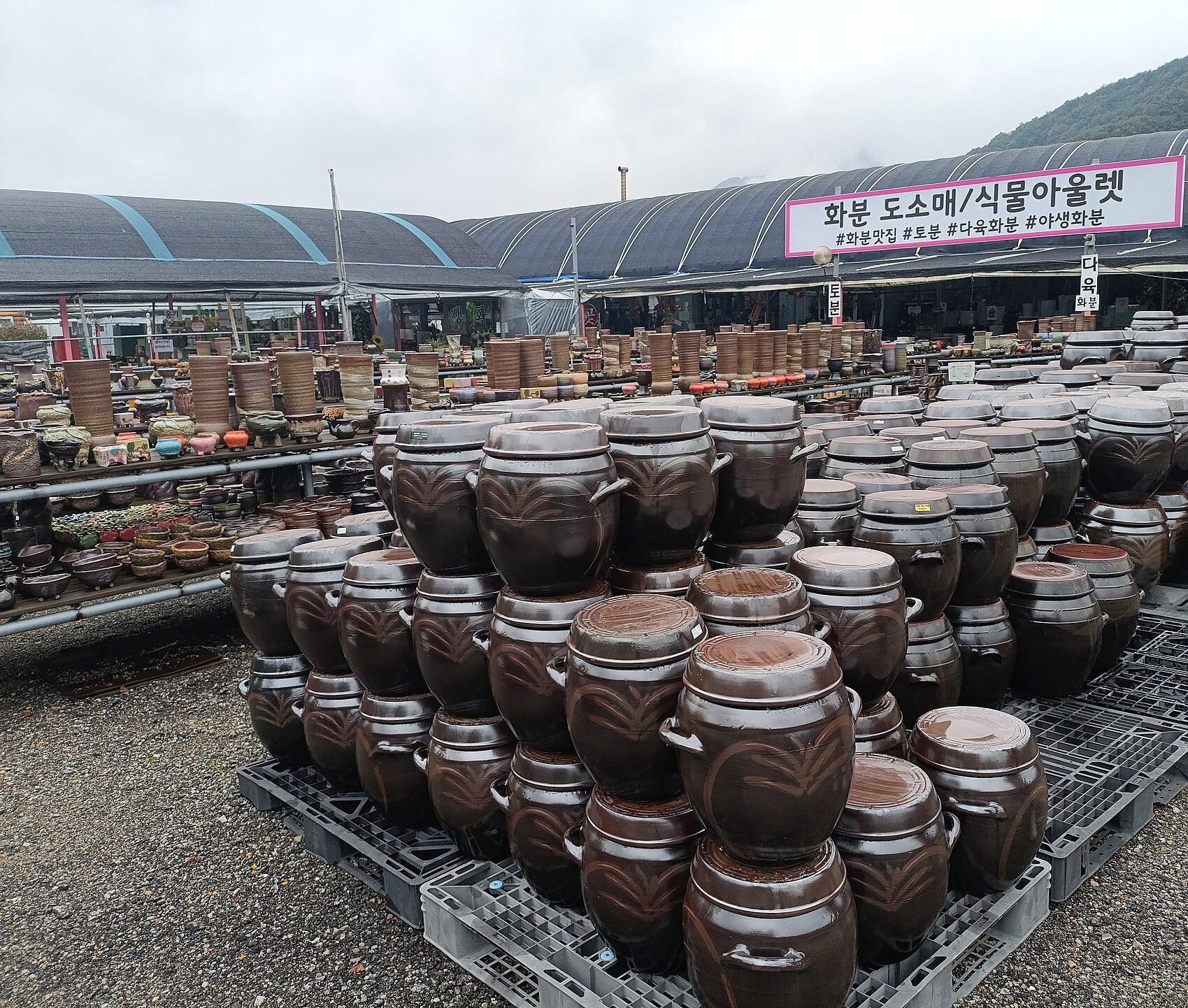
On food safety, the newest official item we could confirm is a Ministry of Food and Drug Safety briefing of 20 December 2016. It covers ceramics, glass, enamel and onggi together, not onggi alone. It says Korea sets standards for how much lead, cadmium, arsenic and antimony may come out of them. We read its practical advice this way: before first use, leave vinegar in the jar for some hours or boil it briefly, and do not keep sour foods in it for long. It also says to use low or medium heat, because the ware can crack. Treat that as general guidance from 2016, not a rule written for your jar. We found no newer onggi-specific guidance, we quote no lead limit because we could not open the standard, and we tested nothing ourselves.
In person, the one place we could confirm from an official page is Oegosan Onggi Village in Ulju County, Ulsan, at 36 Oegosan 3-gil, Onyang-eup. The county’s site introduces the onggi makers in the village, which suggests you can buy from the workshops. We could not verify their hours or whether they take cards. The village museum is reported closed on Mondays and on several holidays, but we saw that in one source only, so check before you go. Near Seoul we found no onggi specialist confirmed by an official page, so phone before you travel. Check for cracks and chips before you pay.
7. Dolsot: check your stove before you check the price
The Encyclopedia of Korean Culture lists this pot as gopdolsot (곱돌솥): a small pot made of a stone called gopdol. It holds heat evenly, so rice steams evenly, and it is sized for one or two people. The 2019 Vogue Korea article said about 6,000 sold in a year on Amazon, under the name Korean Dolsot. It gave no ranking, and we found no second source for the number.
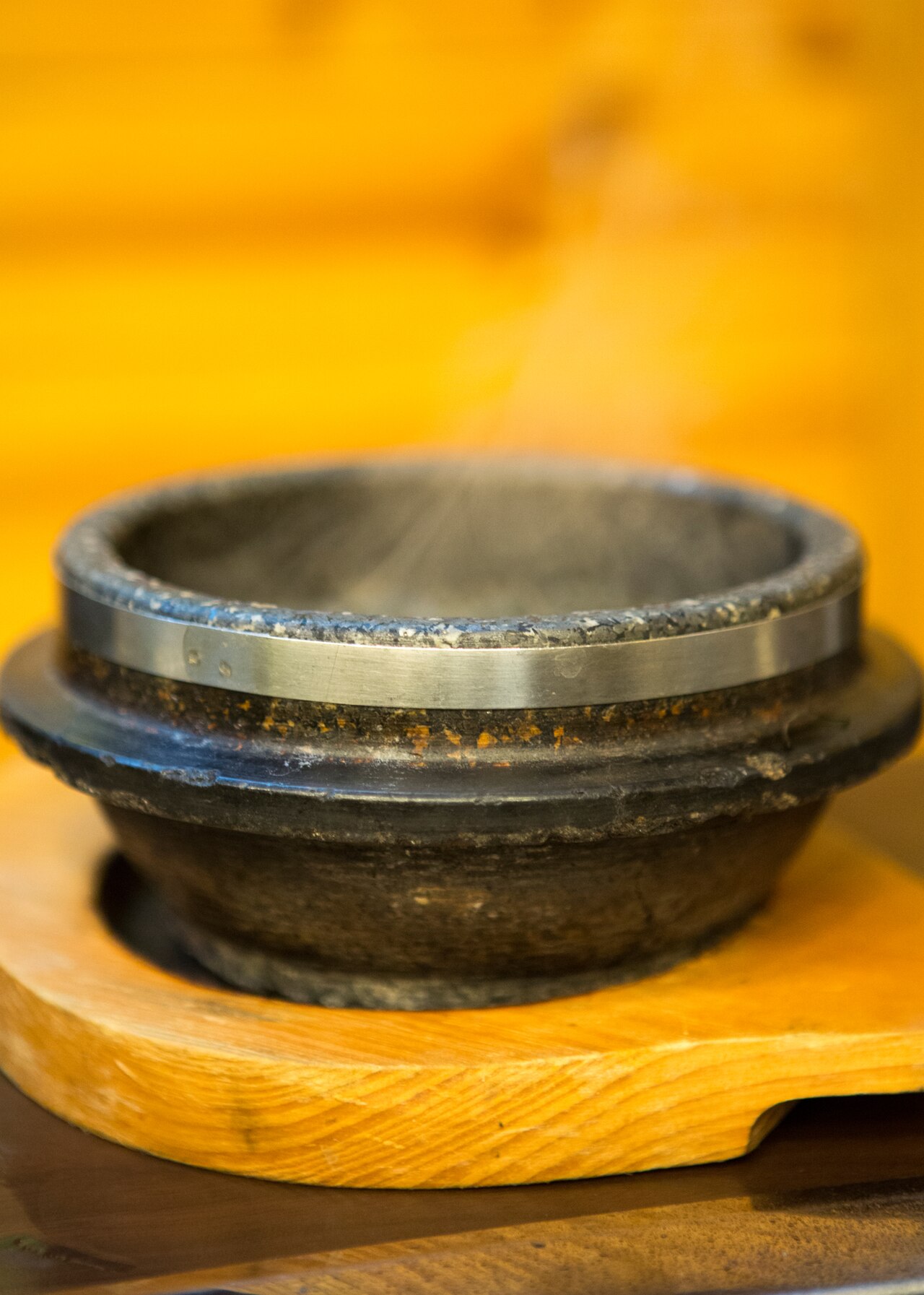
A dolsot is not a ttukbaegi (뚝배기), which is another Korean cooking pot. Listings mix the two names, overseas ones included, so read the 재질 (material) line and not the title.
The bigger question is your stove. LG’s US support page, which shows an update date of 21 April 2026, lists stone pots, porcelain pots and earthen pots among the cookware that does not work on induction, and warns that a porcelain pot may break or heat weakly even if it carries an IH symbol. Samsung Electronics Service says in Korean that induction works with iron, cast iron, enamel and stainless steel that a magnet sticks to, and not with aluminium, copper, glass, ceramics or ttukbaegi. Neither page names dolsot. A dolsot is a stone pot, so on LG’s list it is a pot to expect not to work. On 4 October 2026 the listings marked IH or induction included two stone pots at 47,450 and 48,600 won, two cauldron-style pots at 21,390 and 33,620 won, and a 17 cm pot at 86,510 won. We tested none. Natural-stone pots were mostly listed at 22,270 to 53,500 won, and the larger or premium ones ran from about 99,000 to 225,000 won. The same search for 돌솥 also returns pressure cookers and coated cauldron-style pots.
The encyclopedia records the old way to season a new pot: bake it over a rice-straw fire, let it cool, and repeat three or four times. For a modern kitchen, follow the seller’s leaflet. We found no manufacturer’s page to back any oil or salt-water recipe.
In person, the Korea Tourism Organization’s page for Namdaemun Market lists kitchenware among its goods, gives the address as 21 Namdaemunsijang 4-gil, Jung-gu, and says the market closes on Sundays. It does not mention dolsot by name. Our traditional markets guide covers Namdaemun’s kitchenware arcades.
8. Bojagi: the cloth that replaces the tape
Visit Seoul describes a bojagi (보자기) as a cloth that holds blessings. A gift wrapped in one is tied with knots, with no tape and no ribbon. Jogakbo (조각보), the patchwork kind, is one type of bojagi, according to a Korea Times article from December 2016.
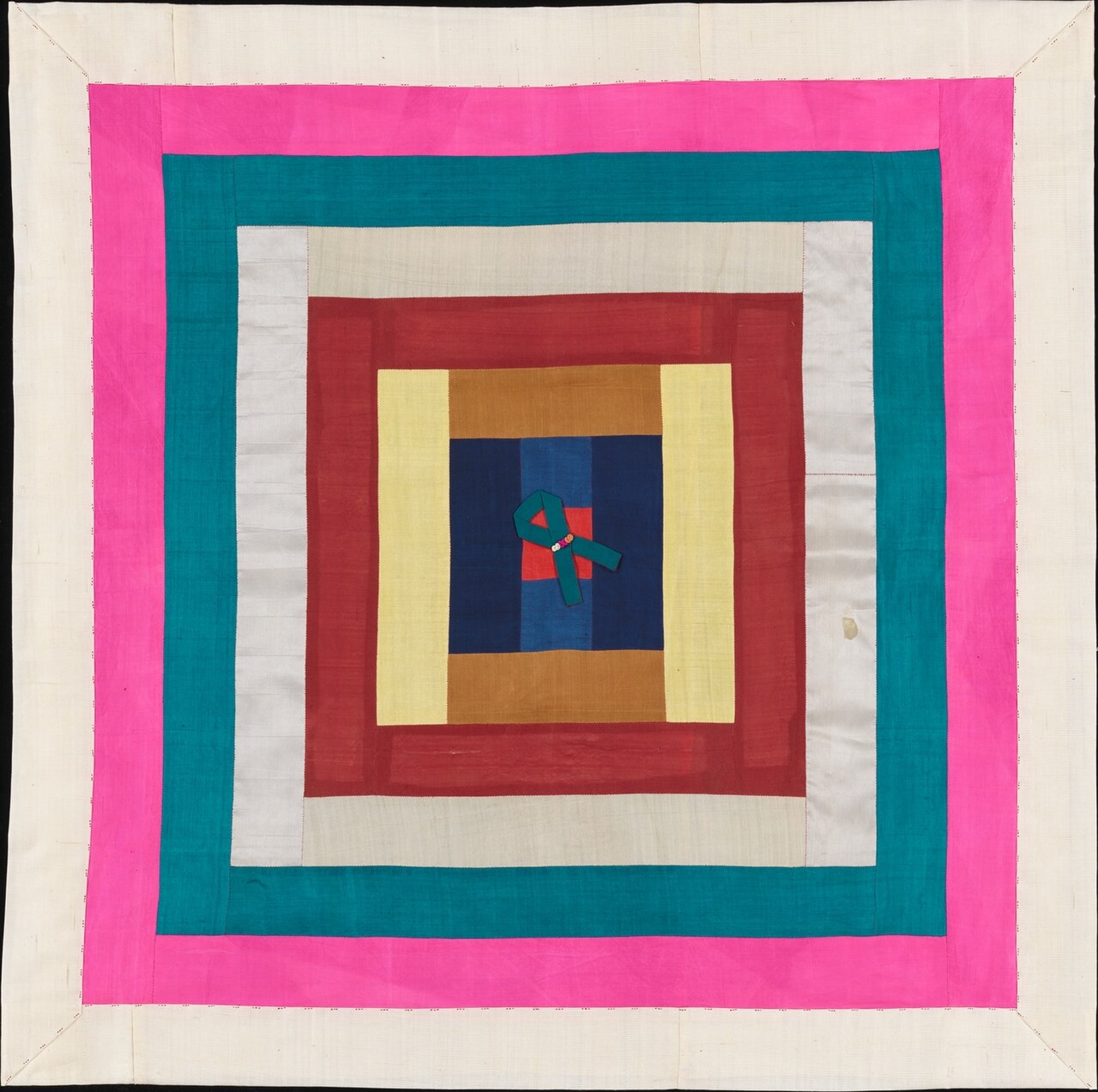
The same article gives a rule that helps when you shop. A bojagi with a knot at the centre is a sangbo (상보), made to cover things. One with strings at the corners is for wrapping clothes or bedding.
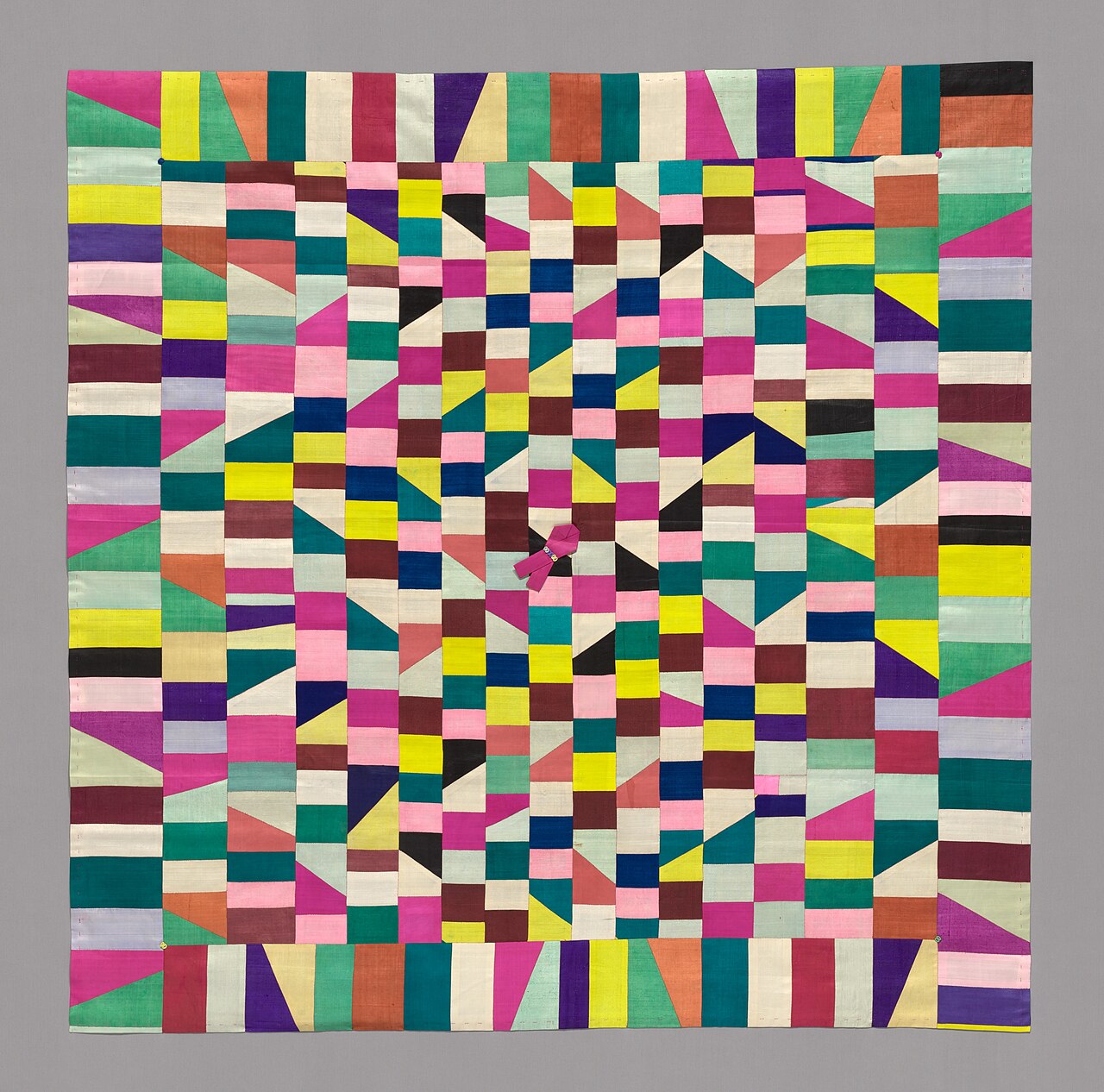
Prices are hard to pin down. A price-comparison search for 보자기 포장 (bojagi pojang, bojagi wrapping) on 4 October 2026 returned mostly gift sets that come wrapped in a bojagi, so we give no range. One example: a 150 by 150 cm bojagi sold as 실크겹보자기 was listed at 13,920 won. We did not check what the fabric really is. Also try 조각보 (jogakbo) or 명절 선물 보자기 (myeongjeol seonmul bojagi, holiday gift bojagi).
We name no shop and no class. Visit Seoul’s page names a wrapping class, but the page was last revised in 2021 and we could not confirm that the class still runs.
9. Gat: easy to see, hard to buy
The gat (갓) is the black horsehair hat with a tall crown and a wide brim. The national heritage portal lists the craft, gannil (갓일), as Horsehair Hat Making, a national intangible heritage designated in 1964. The portal now shows no number. Older pages still say No. 4, so “formerly No. 4” is the accurate wording.
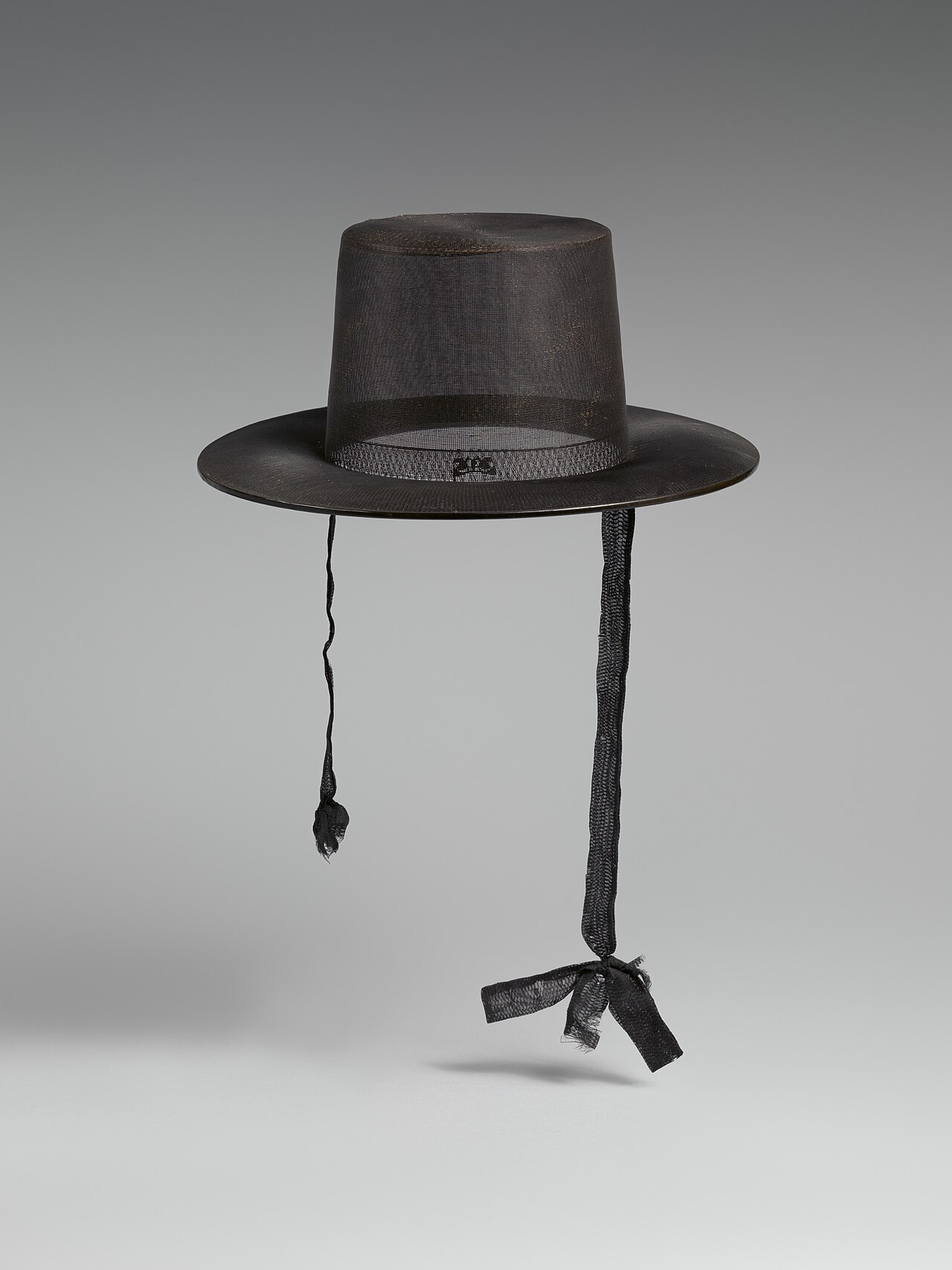
Why the interest now? In August 2025 the Korea Herald ran a piece, republished by the Asia News Network, on the gat worn by a fictional group in an animated film on a streaming service. That explains the curiosity. It is not evidence of sales abroad.
Buying one is the hard part. A price-comparison search for 갓 전통모자 (gat jeontong moja) on 4 October 2026 returned 40 listings priced from 2,140 to 63,420 won. By their titles, 21 were Halloween, grim-reaper or costume hats, and the rest were props, souvenirs and do-it-yourself kits. None was clearly a hand-woven horsehair gat, though we read titles only. We could not confirm any craft seller from an official page, so we name none. Other words to try are 흑립 (heungnip, black gat) and, for museum souvenirs, 국립박물관 문화상품 or 뮷즈.
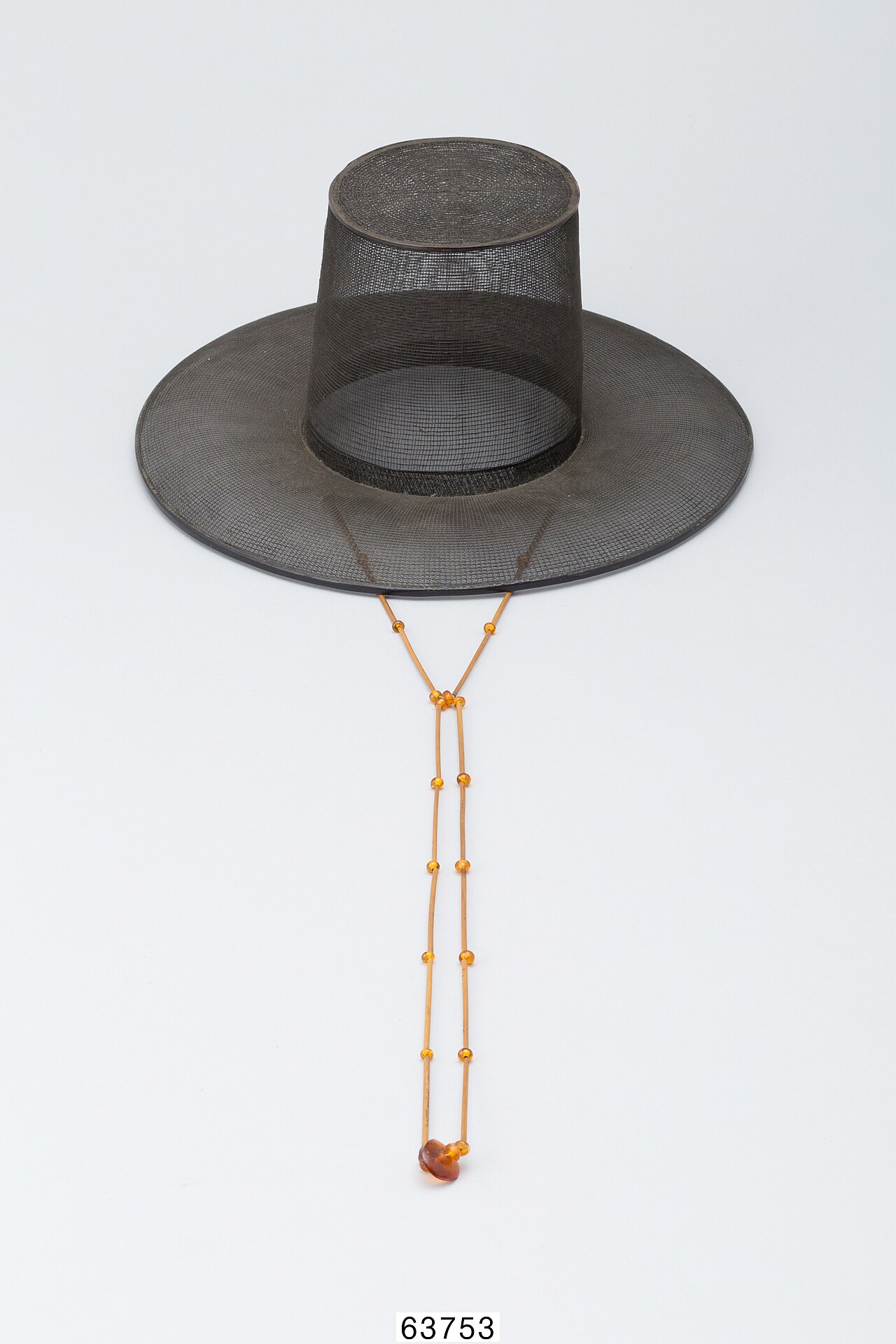
Seeing one is easier. Visit Jeju lists a gat exhibition hall (갓전시관) at 1904 Namjo-ro, Jocheon-eup, Jeju-si. It opens from 10:00 to 18:00 in summer and from 10:00 to 17:00 in winter, and closes on Sundays, Mondays and public holidays. On a weekend trip that leaves Saturday only. The page does not say that the hall sells hats, and we found these details in that one official listing only, so confirm before you go.
We do not know the quarantine rules for carrying a horsehair hat into another country, or the rules for taking an antique out of Korea. We could not open the official pages. Ask the customs or quarantine authority of the country you are flying to, and for an old piece, the Korea Heritage Service.
Getting it home: the suitcase and the post office
A homi in your luggage
Incheon Airport’s restricted-items guide puts spears and swords, and tools, in the group that may not go in the cabin but may go in checked baggage. The homi is not named, and the guide tells you to confirm with your airline. When we searched Korea’s official database of banned cabin items, Aviation Security 365 (avsec365.or.kr), it had no entry for 호미 or 낫 (sickle). The closest item it lists is 모종삽 (trowel). So we will not say that a homi is allowed. Wrap the blade, pack it in checked baggage, and ask your airline before you fly.
A jar in the post
Korea Post’s EMS page for the United States sets a longest side of 1.5 m, a length plus girth of 2.75 m and a weight limit of 30 kg. The rate page charges by the larger of two weights: the real one, or length times width times height in centimetres, divided by 6,000. By that formula a 50 by 50 by 60 cm box counts as 25 kg, so with a big onggi jar the size can matter more than the weight. Check the page for your own destination, and that country’s customs rules, before you post anything. We do not know the actual rates, or what Korea Post pays if a jar arrives broken. Ask at the counter.
Mail to the United States has also changed recently. Hankyung reported on 21 August 2025 that Korea Post would stop taking US-bound air parcels from 25 August and EMS items other than documents from 26 August, because of a change in US duty rules. The Kyunghyang Shinmun reported on 22 October 2025 that US-bound EMS acceptance, which a fire at a government computing centre had halted, was resuming that day, and that senders’ duty prepayment and customs declaration procedures had been introduced. We could not confirm what applies in October 2026, so ask Korea Post before you pack.
If you live here: two things work differently
Browsing a Korean shopping app works from day one. Checkout is where foreign residents get stopped, because the platforms check a Korean phone line registered in your own name. Our online shopping guide explains that check. Our name verification guide has the repair order if the app rejects your name, and our mobile payments guide covers the payment apps behind the same wall.
The VAT refund is the other one. The Korea Tourism Organization’s guidance describes it as a scheme for short-stay visitors and says long-term residents do not qualify. Visiting family or friends may be able to claim. The minimum, the caps and the customs step are in the tax refund section of our budget shopping guide. We keep those figures in one place.
What we left out, and why
- Everything the video says beyond its title and description. We could not read the subtitles.
- A current sell-out of the tiger blanket in the United States. The only source is from 2019.
- Brand names and the names of people in the news stories. We confirmed no brand’s store page. The Yeongju workshop appears only as a search term, because we could not confirm it from an official page. Photographers are credited in the captions.
- Prices for hiking clothes and for a hand-woven gat. We opened no listing for the first and found none for the second.
- The rental fee and closing day for hiking gear at Gwanaksan. The leaflet gives no amount or weekday.
- The lead limit for onggi, any onggi-specific guidance newer than 2016, and washing, weight and heating-mat safety for the blanket. No page we could read confirms them.
- Named shops near Seoul for onggi, dolsot, bojagi and gat. None could be confirmed from an official page.
- VAT refund figures and UPF test reports. The figures are in our budget shopping guide. For UPF we read listing titles only.
Questions people ask
Which of the nine is really popular abroad?
Only two have a sales figure, and both come from one 2019 Vogue Korea article: more than 2,000 homi and about 6,000 dolsot sold on Amazon. A second news report gives a similar homi number for a different time. The blanket has a claim of heavy demand but no number. For the other six we found nothing independent.
Is a Korean mink blanket made of mink?
No. The listing we opened calls it mink-touch microfiber.
Can I carry a homi onto a plane?
Do not plan on it. Incheon Airport’s guide puts blades and tools in checked baggage, and the homi is not listed by name. Ask your airline.
Will a dolsot work on an induction stove?
Probably not, if it is a natural stone pot. LG’s support page lists stone pots as unsuitable for induction, and Samsung says the base must be one a magnet sticks to. A pot marked IH is a different product, and we tested none.
I live in Korea. Can I get the VAT back on these?
The Korea Tourism Organization’s guidance says the refund is for short-stay visitors, not long-term residents. A visiting relative may qualify.
Official resources
- Seoul Hiking Tourism Center — Gwanaksan branch leaflet (English PDF)
- Visit Seoul — Dongdaemun Shopping Complex and gift wrapping with bojagi
- Korea Tourism Organization — Namdaemun Market
- National heritage portal (Korean) — Onggijang and Gannil
- Ulju County, Ulsan (Korean) — Oegosan Onggi Village
- Visit Jeju (Korean) — gat exhibition hall
- Ministry of Food and Drug Safety (Korean) — briefing on ceramics, glass, enamel and onggi
- Incheon International Airport (Korean) — restricted items
- Korea Post EMS (Korean) — conditions for the United States and rates and volume weight
- Encyclopedia of Korean Culture (Korean) — gopdolsot
- Samsung Electronics Service (Korean) — cookware for induction
- LG Electronics (US support) — induction cookware compatibility
- UNESCO — Kimjang, making and sharing kimchi
Verification note. On October 4, 2026 an AI-assisted check opened the press reports, official pages and price listings named above. The kimjang vest turned out to be a floral quilted vest, not an apron. The 6.3 million won beside it in the video’s chapter list is, in the Korea Times and YTN reports, the price of an Italian luxury brand’s vest. Korea’s official database of banned cabin items had no entry for the homi. A price-comparison search for 갓 전통모자 returned 40 listings, 21 of them titled as costume or Halloween hats and none clearly a hand-woven gat. LG’s support page lists stone pots among the cookware that does not work on induction. Sources disagree on the year of the homi sales figure, and the national heritage portal and the Encyclopedia of Korean Culture disagree on the day the gat craft was designated, so I give only the year. We were blocked more than once: we could not read the video’s subtitles, we could not open the food standard that holds the lead limit for onggi, and we could not open the official pages on carrying a hat or an antique abroad. I publish this guide under my own name and am responsible for what it says. Rules and fees in Korea change often; if you spot something out of date, email hello@90dayskorea.com and it will be re-checked and corrected.
How we checked this: on 4 October 2026 we read the video’s title, description and view count through the YouTube Data API and used nothing else from it. Claims about demand abroad come from a Vogue Korea article of 12 March 2019; the Korea Times article of 23 January 2026 reports a trend inside Korea. Prices are the figures shown on Danawa price-comparison search pages that day, using the first 40 listings of each search, plus one marketplace listing for the blanket and one Australian retailer listing for the homi.