
Last updated: October 21, 2026 (editorial wording and formatting updated; facts not rechecked in full).
Facts last checked: October 20, 2026: Korea Post domestic parcel rate table, as noted in the rates section; no article-wide check date recorded for other statements.
Originally published: October 20, 2026: first publication.
To send a parcel within Korea, prepare the recipient’s full address and contact details, pack the contents securely, and check the post office’s postal-counter hours. At the counter, ask for 등기소포, a registered parcel, if you want a recorded delivery service.
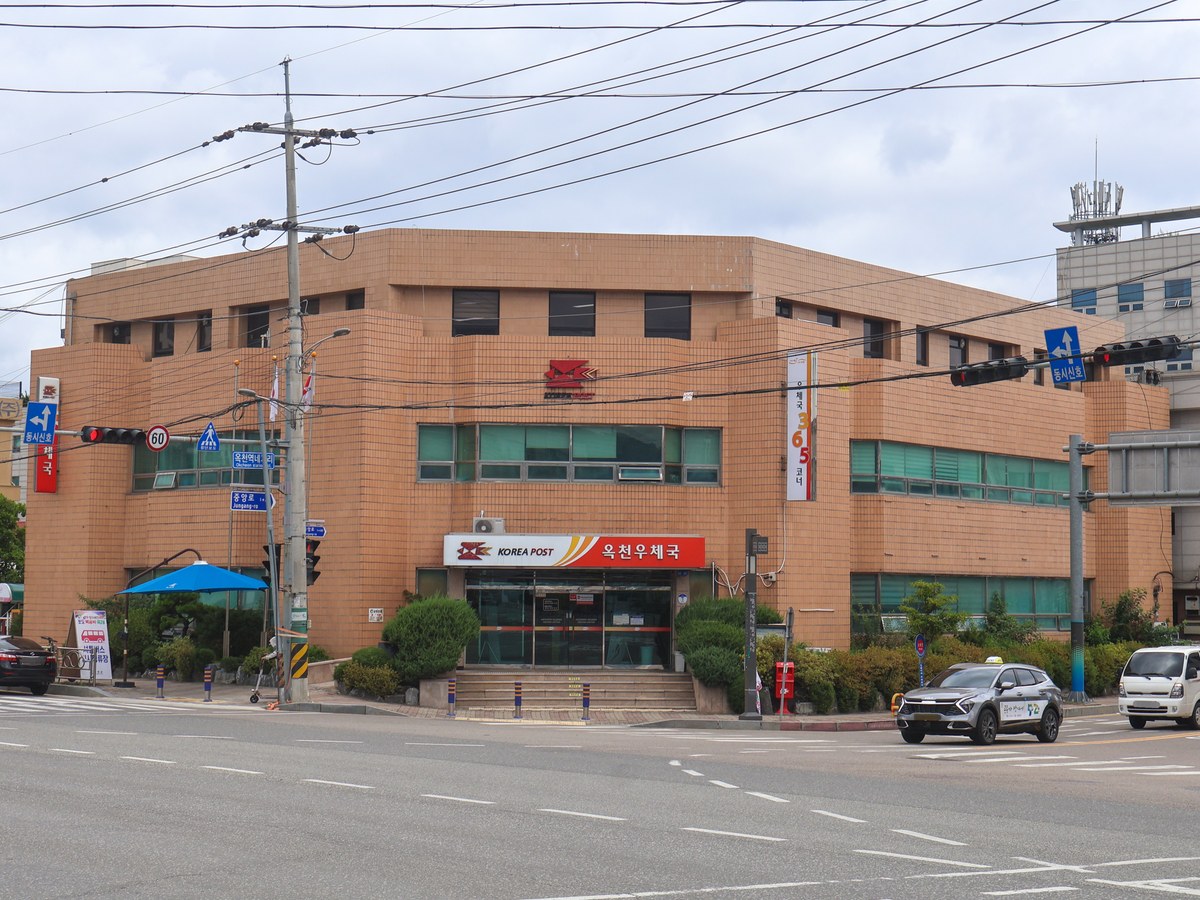
This guide covers taking a domestic parcel to a staffed Korea Post counter. It does not cover shipping overseas, arranging a home pickup or sending a shop return without the seller’s instructions.
Prepare the address before you go
Ask the recipient to send their address in Korean as text. Include the postal code and the apartment, building or room details needed to reach them. Copy the address they provide rather than rebuilding it from a map pin or an English hotel name.
Have the following ready for both the sender and recipient:
- Name
- Postal address, including detailed address information
- Postal code
- Contact telephone number
Korea Post’s counter-parcel preparation guide (Korean) shows the sender and recipient information used for advance registration. 보내는 분 means sender; 받는 분 means recipient. 상세주소 is the detailed address, such as the apartment or room information.
For a hotel or guesthouse, ask permission before sending a parcel there. Confirm the name staff need on the label, whether they can receive it before check-in, and whether they’ll still hold it after checkout. Don’t assume a booking automatically includes parcel storage.
If you have a data-only SIM, tell the clerk that you can’t receive ordinary calls. Ask how to record a usable contact number; do not invent a Korean number or use someone else’s without permission. This guide doesn’t confirm whether the online form accepts foreign telephone numbers.
Check postal hours, not banking hours
Korea Post lists staffed postal counters as open Monday to Friday, 9 a.m.-6 p.m., excluding public holidays. Banking counters have different hours, so a banking listing isn’t the right reference for posting a box.
Also check these points:
- Some branches close for lunch.
- The cutoff for mail leaving that day varies by branch.
Arriving before 6 p.m. doesn’t mean your parcel will leave that afternoon. Check the branch through Korea Post’s post office finder (Korean), then confirm the dispatch cutoff if timing matters. Official service hours (Korean)
Search for 우체국 when looking for a post office. If you need help with packaging or the address, plan around a staffed counter rather than assuming an automated postal machine will handle the same task.
Check the contents and the finished package
For a rectangular domestic parcel, Korea Post publishes these limits:
- Maximum weight: 30 kg.
- Maximum length plus width plus height: 160 cm.
- No individual side longer than 100 cm.
- Minimum combined dimensions: 35 cm, with length at least 17 cm and width at least 12 cm.
Measure the packed box, including its outer packaging. If your item is smaller than the minimum, ask which postal service is appropriate rather than assuming it must go as a parcel. Korea Post parcel dimensions (Korean)
Use a sound box and enough cushioning to stop the contents moving. Cover old address labels and barcodes on reused packaging. Korea Post requires packaging that protects the contents and does not damage other mail. Official packaging guidance (Korean)
Check unusual contents before making the trip. The parcel service lists restrictions including cash and cash-equivalent items, glass and ceramics, and certain electronics such as laptops. A fragile sticker does not make a restricted item acceptable. Tell the post office exactly what you intend to send and confirm which service to use and how to pack it. Parcel-service restrictions (Korean)
If you need a box or packing supplies, ask the branch what it has and what they cost before arriving with loose items.
Ask for the service you need
At the counter, show the destination and say:
국내로 소포를 보내고 싶어요.
“I would like to send a parcel within Korea.”
For a registered parcel:
등기소포로 보내고 싶어요.
“I would like to send it as a registered parcel.”
Korea Post distinguishes registered parcels from 일반소포, ordinary parcels. Its guidance says ordinary parcels do not have recorded handling and are not compensated if lost. Choose registered service if you need to track the parcel. It is not a promise that every item’s full value will be reimbursed. Service distinction (Korean)
If this is a shopping return, stop and check the seller’s instructions first. Confirm the return address, any return authorization and who pays postage. Posting something to the address on the original box may not complete the seller’s return process. See the 90DK guide to online shopping in Korea for more about shopping.
Check the price and expected delivery date
The published standard next-day counter rate is ₩4,000 for a registered parcel up to 3 kg with length, width and height adding up to no more than 80 cm. Both limits matter: a light but bulky box can fall into a higher price band.
The rate table is labeled effective 1 June 2025; it was checked on 20 October 2026 KST. The listed figure is postage, not a quote for packaging or extra services. Ask the clerk for the final amount after weighing and measuring. Korea Post domestic parcel rates (Korean)
The next-day rate does not guarantee next-day delivery on every route. The official guidance gives different arrangements for Jeju and warns that delivery times can differ for islands and other locations. Delivery qualifications (Korean)
If you are sending a box to your next accommodation, ask about the expected delivery date before paying. Leave enough time for a delay rather than arranging for it to arrive on your last morning.
Useful questions are:
오늘 발송되나요? : “Will it be dispatched today?”
언제쯤 도착하나요? : “When is it expected to arrive?”
총요금이 얼마인가요? : “What is the total charge?”
Keep the receipt until the parcel arrives
Keep the receipt and send the tracking number privately to the recipient. Korea Post’s parcel page (Korean) provides 배송 조회, delivery tracking, using the 13-digit registered-item number. The field is labeled 등기번호.
Save a photo of the receipt, but do not post the full label publicly: it contains personal contact and address information. If delivery appears stalled, use the recorded number when asking the post office to check.
Before leaving the counter, confirm the destination, service and receipt. Those checks are easier to make while the parcel is still in front of you.
Sources
- Korea Post: counter-parcel preparation guide (PDF) (Korean)
- Korea Post: post office finder (Korean)
- Korea Post: service hours (Korean)
- Korea Post: parcel size and weight limits (Korean)
- Korea Post: packaging guidance (Korean)
- Korea Post: domestic parcel rates (Korean), checked 20 October 2026
- Korea Post parcel service: items that cannot be sent (Korean)
- Korea Post parcel service: service types and delivery arrangements (Korean)
- Korea Post parcel service: delivery tracking (Korean)