
Last verified: 2026-08-27 00:37 KST
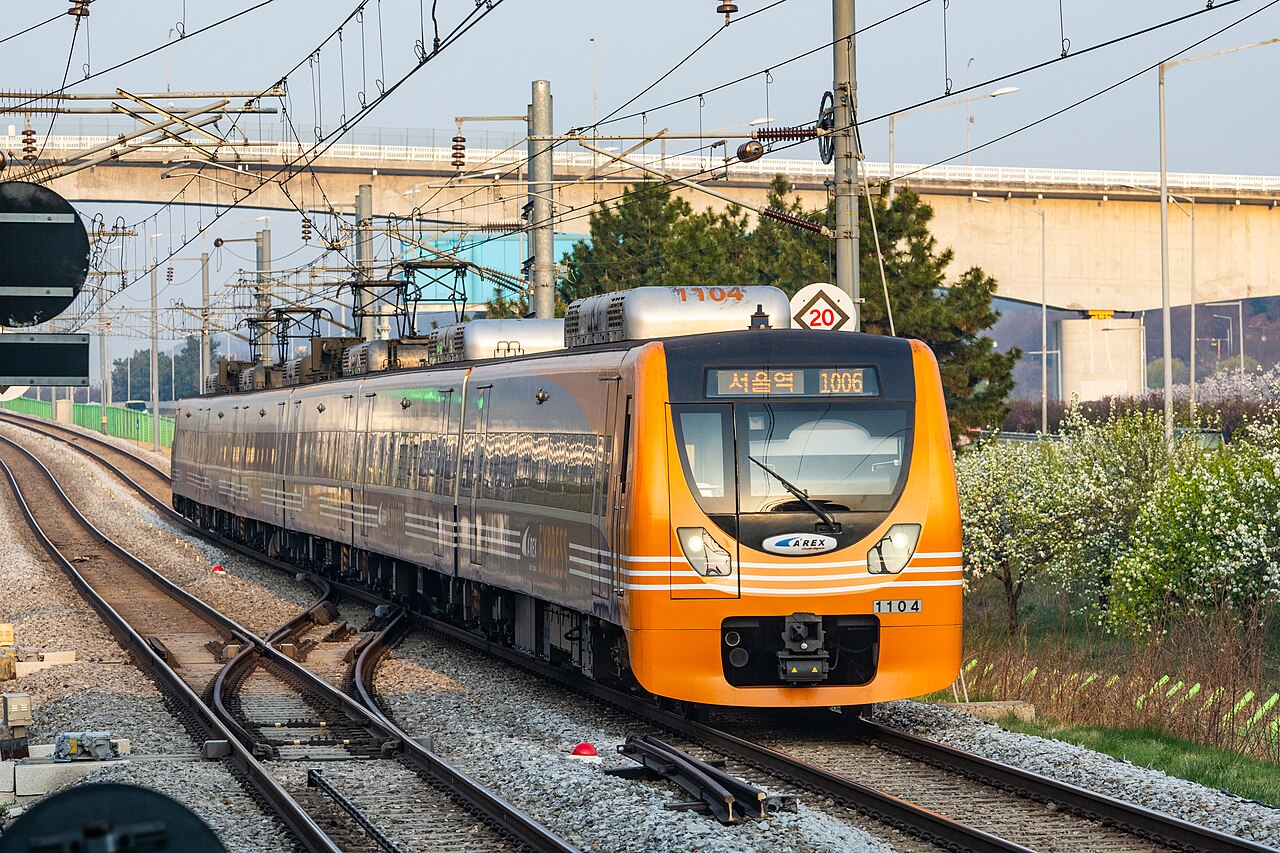
The three ways out of Incheon are a train, a bus and a taxi, and every guide ranks them by price. That ranking is close to useless at 1am with two suitcases and no Korean number. What decides the right answer is your luggage, your landing time, and whether your accommodation sits near a bus stop or near a subway line.
Below are the actual published numbers — pickup bay codes, night surcharge bands, operator fares — from Incheon International Airport Corporation and from the bus operator’s own site, plus one service almost no English guide mentions that removes the luggage problem entirely.
Taxi: the bay codes matter more than the fare
Unlicensed call vans posing as taxis and overcharging arriving passengers are common enough that the airport warns about it on its own taxi page, and tells travellers to use the designated stands rather than anyone who approaches them in the arrivals hall. Take that literally. Nobody who walks up to you inside the terminal is the taxi you want.
| Type | Base fare | Terminal 1 bay | Terminal 2 bay | Night surcharge |
|---|---|---|---|---|
| Standard taxi — Seoul | 4,800 KRW | 5C, 6C, 6D | 7C | 40% 23:00–02:00 · 20% 22:00–23:00 · 20% 02:00–04:00 |
| Standard taxi — Gyeonggi | 4,800 KRW | 6D | — | 30% 23:00–04:00 |
| Standard taxi — Incheon | 4,800 KRW | 5D | — | 40% 23:00–02:00 |
| Deluxe / Jumbo (9-seat) | 7,000 KRW | 7C, 8C | 7D | 20% 22:00–04:00 (Gyeonggi vehicles 23:00–04:00) |
| International / Smart Taxi | Flat fare within Seoul | 4C | 3C | Foreign-language support |
| Pre-booked (hailing) taxi | Per booking | 1C, 14C | 1C, 10C | — |
Two things follow from that table that are worth internalising before you land.
First, night surcharges depend on the time the taxi is used, not the aircraft landing time. Budget for the applicable band after immigration and baggage collection; the quoted percentages apply to the relevant taxi tariff, not every vehicle or flat-fare booking.
Second, International Taxi and Smart Taxi charge a flat fare within Seoul and are staffed with foreign-language support — International Taxi on 1644-2255, Smart Taxi on 032-743-2357. A flat fare on a late-night ride, when the meter would be running 40% high, is not the tourist trap it sounds like. Bay 4C at Terminal 1, bay 3C at Terminal 2.
Wheelchair users have dedicated call taxis rather than a stand: Incheon Transport Corporation on 1577-0320, Seoul Facilities Corporation on 1588-4388.
Airport limousine bus: the published fares
These are the fares published by Airport Limousine Co., which runs Seoul-area routes. Routes to other regions are operated by different companies with their own fares, and this operator states plainly that it does not offer online seat reservation.
| Service | Route | Adult | Child |
|---|---|---|---|
| Deluxe limousine | Seoul city ↔ Incheon Airport (direct) | 17,000 KRW | 12,000 KRW |
| Deluxe limousine | Seoul city ↔ Incheon Airport (via Gimpo) | 16,000 KRW | 12,000 KRW |
| Deluxe limousine | Seoul city ↔ Gimpo Airport | 8,000 KRW | 6,000 KRW |
| Deluxe limousine | Gimpo Airport ↔ Incheon Airport | 8,000 KRW | 6,000 KRW |
| Late-night N6000 / N6002 | Seoul city ↔ Incheon Airport | 17,000 KRW | 10,000 KRW |
| Late-night bus | Songjeong Station ↔ Incheon Airport | 10,000 KRW | 6,000 KRW |
“Child” means elementary school age. From middle school upward the adult fare applies. One preschool child travelling with one adult rides free — but if you want that child to have an assigned seat, or one adult is travelling with two small children, the child fare applies.
The airport late-night guide lists N6000/N6002 at 17,000 KRW adult and 10,000 KRW child; Songjeong is 10,000/6,000 KRW. N6701/N6703 are different services at 18,000/12,000 KRW. Check your terminal, destination and departure time before choosing a route. Fares checked 6 October 2026.
The payment rule that strands people
This one is on the operator’s own front-page notice and it catches foreign residents constantly, because it runs against what they have learned about paying for transport in Seoul.
Heading to the airport, you pay the driver in cash or with a transit card — T-money or a postpaid transit card. The Climate Card and the Discover Seoul Pass are not accepted on these buses. A credit card cannot be processed on board at all: payment has to be completed on arrival at Incheon Airport, and the operator states the driver may temporarily hold a passenger’s credit card to prevent unpaid fares.
If you have been using a Climate Card for everything in Seoul, this is the one journey where it does not work. Carry cash or a loaded T-money card — the mechanics of which are in our T-money guide.
AREX: the times, station by station
The airport railroad runs from both terminals into central Seoul. These are the journey times the airport publishes, measured from Terminal 2, on the all-stop service:
- Terminal 1 — 6 min · Airport Cargo Terminal — 10 · Unseo — 14 · Yeongjong — 18 · Cheongna International City — 27
- Geomam — 31 (Incheon Line 2) · Gyeyang — 37 (Incheon Line 1)
- Gimpo Airport — 44 (Lines 5, 9, Gimpo Goldline, Seohae Line)
- Magongnaru — 47 (Line 9) · Digital Media City — 54 (Gyeongui-Jungang, Line 6)
- Hongik University — 58 (Gyeongui-Jungang, Line 2) · Gongdeok — 62 (Gyeongui-Jungang, Lines 5, 6)
- Seoul Station — 66 (KTX, Gyeongui-Jungang, Lines 1, 4)
Checked 2026-08-27. Read those transfer points rather than the endpoint. If you are staying anywhere on Line 2 or Line 6, Hongik University at 58 minutes beats riding to Seoul Station at 66 and doubling back. Gongdeok at 62 puts you on Lines 5 and 6 directly.
The Transportation Center is on basement level 1 at both terminals — ticket vending machines at Terminal 1, a ticket counter at Terminal 2. Follow signs for the Airport Railroad or Transportation Center, not generic “subway” signage.
Current fares and the express-versus-all-stop difference change, and the airport directs travellers to the airport railroad hotline on 1599-7788 or the operator’s own site rather than publishing a fare table on that page. We are not going to invent one here. What we can tell you is that the times above are official and that the all-stop service reaches every transfer point listed.
The luggage answer nobody mentions
If the reason you are considering a taxi is that you cannot face stairs and transfers with two suitcases, there is a third option that most English guides skip entirely.
T-Luggage is a same-day luggage delivery service between subway stations and the airport, operated in connection with the Seoul subway. You hand your bags over and travel unencumbered.
Registration counters at the airport are run by Hanjin Express: Terminal 1, third floor, opposite check-in counter B, and Terminal 2, third floor, opposite check-in counter H. On the Seoul side, staffed locations that also offer storage are at Seoul Station (basement 1, between Exits 1 and 2), Hongik University Station (basement 1, in the airport railroad connecting passage), Myeongdong Station (basement 1, inside Exits 1, 9 and 10), and Gimpo Airport Station (basement 1, near the Line 5 gate towards the international terminal). Booking is online at Tluggage.co.kr or in person.
The limits are specific. At least one end of the trip must be a staffed registration counter — delivery between unmanned lockers alone is not available. Stations without large lockers cannot be used. The service covers Seoul Metro Lines 1 to 9 only. Checked 2026-08-27.
For a heavy arrival into a Line 2 neighbourhood, the honest comparison is not train versus taxi. It is train plus luggage delivery versus taxi — and that changes the maths.
Landing late
Do not plan around your scheduled landing time. Plan around the time you will actually walk out of arrivals, which is landing plus immigration plus baggage reclaim, and which can be an hour or more at peak.
If you miss the last train, first check whether a late-night bus actually serves your accommodation: N6000/N6002 cost 17,000 KRW for an adult, while other night routes have different fares. Compare the final walk or transfer with a designated-stand taxi quote. Plan around your actual arrivals exit time and the current timetable, not merely your scheduled landing.
Have data working before you leave the terminal. A map app and a working connection turn every one of these choices from a gamble into a lookup — the setup order is in our SIM and eSIM guide and our essential apps guide.
Verification note. On September 24, 2026 an AI-assisted check compared the 4,800 KRW standard taxi base fare and the 40% night surcharge from 23:00 to 02:00 against Incheon International Airport Corporation, and confirmed the official sources linked in this guide still resolve to the same pages. I publish this guide under my own name and am responsible for what it says. Rules and fees in Korea change often; if you spot something out of date, email hello@90dayskorea.com and it will be re-checked and corrected.
Sources
- Incheon International Airport Corporation — Taxi guide: fares, pickup bay numbers, night surcharges
- Incheon International Airport Corporation — Airport Railroad guide, journey times, T-Luggage and T-Locker
- Incheon International Airport Corporation — Bus guide and late-night timetables
- Airport Limousine Co. — official fare table
- Airport Limousine Co. — payment notice (Climate Card and Discover Seoul Pass not accepted) (Korean)
Last verified: 2026-08-27 00:37 KST. Fares, surcharge bands and bay numbers are taken from the pages linked above as published on that date. Airport transport pricing is revised periodically; check the source page before a decision that depends on an exact figure.