
Last verified: 2026-10-26
Before paying a bill in your new rental, ask who collects each charge and which period it covers. Your rent, building maintenance fee and household utility usage can appear on different notices. A listing that says “utilities included” still needs a written explanation of what is included.
Rental paperwork, bills and meters
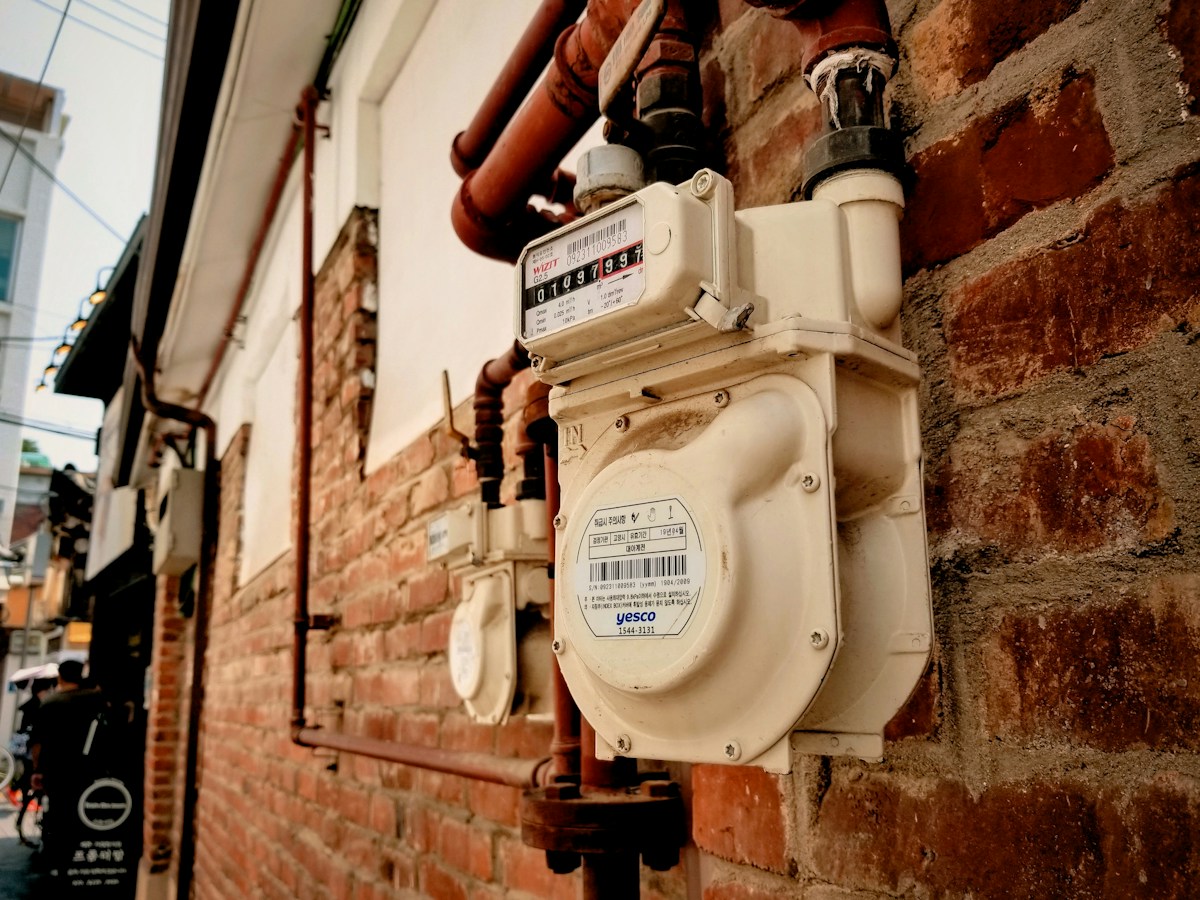
The contract and water notice are official blank forms. The gas-meter photo shows a real Seoul installation. Open each image at full size.
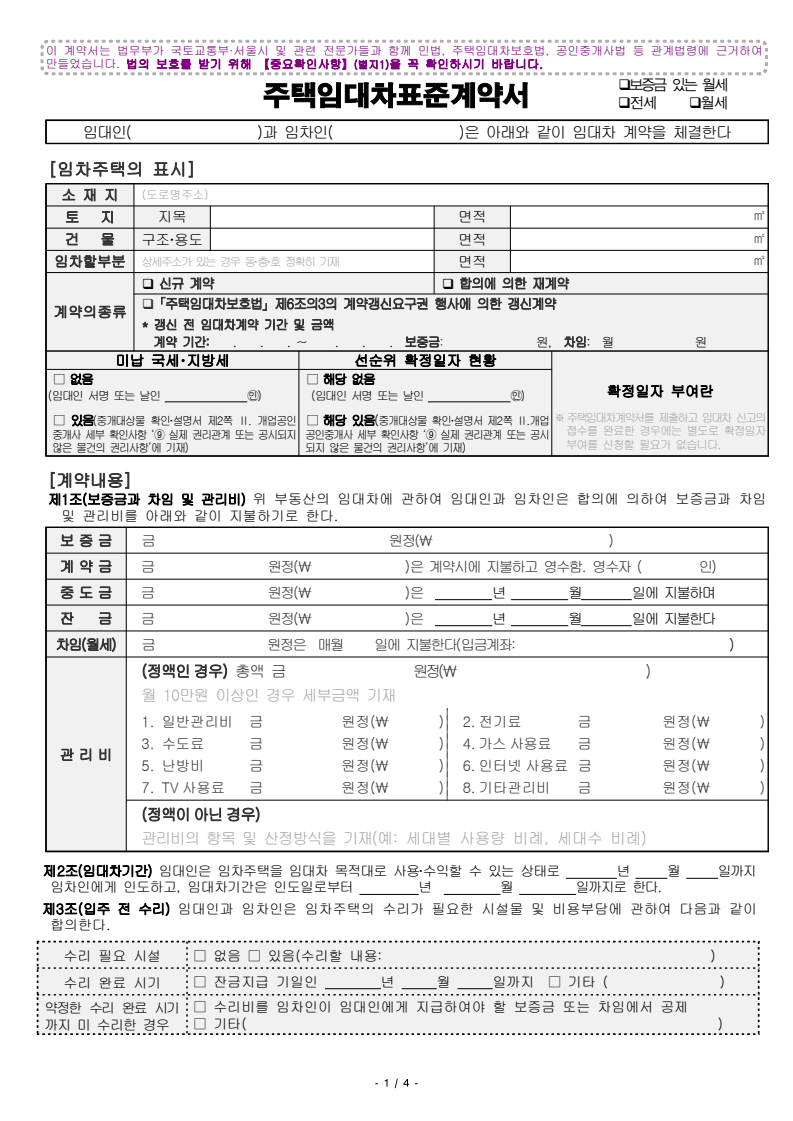
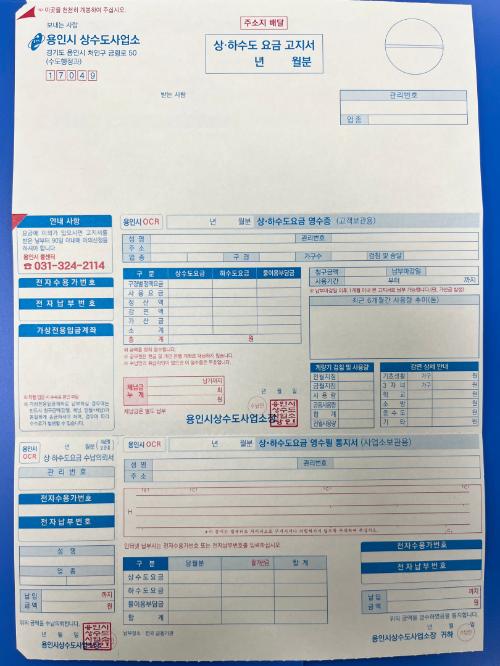
Start with the landlord or management office. Ask for the latest bill with the former tenant’s personal details covered. Use it to identify the supplier, customer number and billing period. You don’t need to copy the former tenant’s payment details.
Make a bill list before moving in
Keep a note with a row for each charge. The table below is a checklist to complete for your home, not a statement that every building bills this way.
| Charge | Korean wording to recognize | What to confirm |
|---|---|---|
| Rent | 월세 |
Amount, payment date and agreed recipient |
| Maintenance fee | 관리비 |
Fixed charge, itemized charges and excluded services |
| Electricity | 전기요금 |
Direct supplier bill or building collection |
| Gas | 도시가스요금 |
Supplier, account holder and move-in arrangements |
| Water and sewerage | 수도요금 / 하수도요금 |
Individual bill or a shared-building calculation |
| Internet | 인터넷 |
Included connection or your own subscription |
Ask whether heating and hot water appear under gas, district heating or a building charge. Don’t decide which supplier to pay from the boiler’s brand alone. For heating controls and winter use, see the Korean winter guide.
“관리비 포함” means the maintenance fee includes something; it doesn’t identify every included item. Get the actual list. If the advertisement and proposed agreement differ, resolve the difference before signing.
Record the handover
On move-in day, ask which meters serve your room. Photograph the readings and identifying labels with permission, and keep the handover date in the same note. Don’t open locked cabinets or touch service equipment.
Ask the landlord to explain how the previous resident’s usage was settled. A bill arriving after you move in can cover an earlier period. Compare its usage dates with the handover record before treating the entire amount as yours.
Useful questions:
- 이 관리비에는 어떤 항목이 포함되어 있나요? Which items does this maintenance fee include?
- 전기, 가스, 수도는 각각 어디에 납부하나요? Who do I pay for electricity, gas and water?
- 이전 세입자 사용분은 정산되었나요? Has the previous tenant’s usage been settled?
Keep the answers in writing. A screenshot of an agreed item list is more useful for a later question than a note saying only “bills included.”
Electricity: identify the correct account
KEPCO’s official website directs electricity customers to HanJeon ON for bill inquiries, payment and name changes. The linked service is in Korean; use browser translation for the menu, then compare names and customer numbers against the actual bill.
If the building collects electricity charges, ask its office how your usage is calculated and where it appears on the statement. Don’t open a second account simply because you haven’t received a separate KEPCO notice.
Before making a transfer, check the customer number, amount, due date and recipient shown by the bill or the supplier’s verified service. Ask the supplier to confirm an unexpected payment request through its official contact route. Don’t send money based only on a message from an unfamiliar sender.
This guide doesn’t promise that an overseas card will work. Ask which payment methods are available for your account before relying on a card issued abroad.
Gas: confirm service before you need hot water
Ask the landlord or management office to identify the local gas supplier and explain whether a move-in appointment is needed. Request the official booking route and ask whether someone must be home. Book before the day you expect to use the service if an appointment is required.
Don’t try to reconnect pipes or modify a valve to make an appliance work. Have the supplier or the responsible qualified service provider handle connection work. If you suspect a gas leak, do not use flames or electrical switches. Leave the room and contact the gas supplier’s emergency service from outside; call 119 for a fire or immediate danger. Korea Gas Safety Corporation’s household leak guidance (Korean) warns against operating electrical equipment and says to contact the gas supplier and confirm safety before using the service again. Keep the emergency-number guide available on your phone.
Keep the gas customer number with the appointment details. The company that provides gas to the address, the boiler manufacturer and the building office have different roles. A boiler repair request doesn’t automatically arrange a utility account change.
Water: check whether the meter is shared
Ask whether your water charge comes directly from the water authority or through the building. If it is shared, ask for the calculation basis and the period covered. Don’t assume the number of occupants or the floor area is the method until the landlord explains it.
For Seoul, Arisu’s moving-settlement service (Korean) lets users settle charges up to the moving day. Its instructions ask for the meter reading on moving day and address customer-number changes. A shared-building account may need the management office’s involvement. Other cities have their own water services.
Paying and keeping records
Save the bill and the payment confirmation together. Label the file with the service and billing period, not just the day you paid. This helps distinguish a new bill from a reminder for the same bill.
If someone pays on your behalf, ask for proof that identifies the actual bill. If you set up automatic payment, note the account it uses and ask how to stop or transfer it when you leave. Closing a bank account is a separate action from settling a utility bill.
When the first bill doesn’t make sense
Start with the usage period, then check the meter or customer number. Ask whether the statement is a new charge, an unpaid-balance notice or a combined bill. Keep the envelope or message that came with it so the office can see where it was sent. A larger total alone doesn’t establish which part is wrong.
If the name on the bill isn’t yours, ask whether the account is being transferred, kept in the owner’s name or collected by the building. Don’t silently replace a name or account number in a payment instruction. Ask the responsible supplier or office to explain what needs changing and keep its answer with the bill.
For a shared charge, request the full calculation rather than only your share. Ask which billing period, meter reading and allocation method were used. If you still disagree, write down the exact item you dispute. Keep that question separate from unrelated rent or repair complaints so the office can answer it directly.
After an explanation, add the payment date and any corrected amount to your bill list. This gives you a comparison for the next statement without assuming that every month’s usage should be the same.
Before returning the keys
Arrange final readings and settlement with the landlord or building office. Ask which charges are final and which will arrive later. Record the agreed way to handle a later bill, including who will provide the statement.
Don’t subtract an estimated utility amount from rent or a deposit without an agreement. Keep utility receipts with the checkout record and the rental-contract checklist.
Source scope
An AI-assisted source check compared the linked official electricity, water-settlement and gas-safety guidance with the statements in this guide. Meter photos, a bill list and written handover questions are editorial suggestions. This article doesn’t set your building’s charges, establish liability for an old balance or verify an individual account. No utility account or payment was opened or tested.