
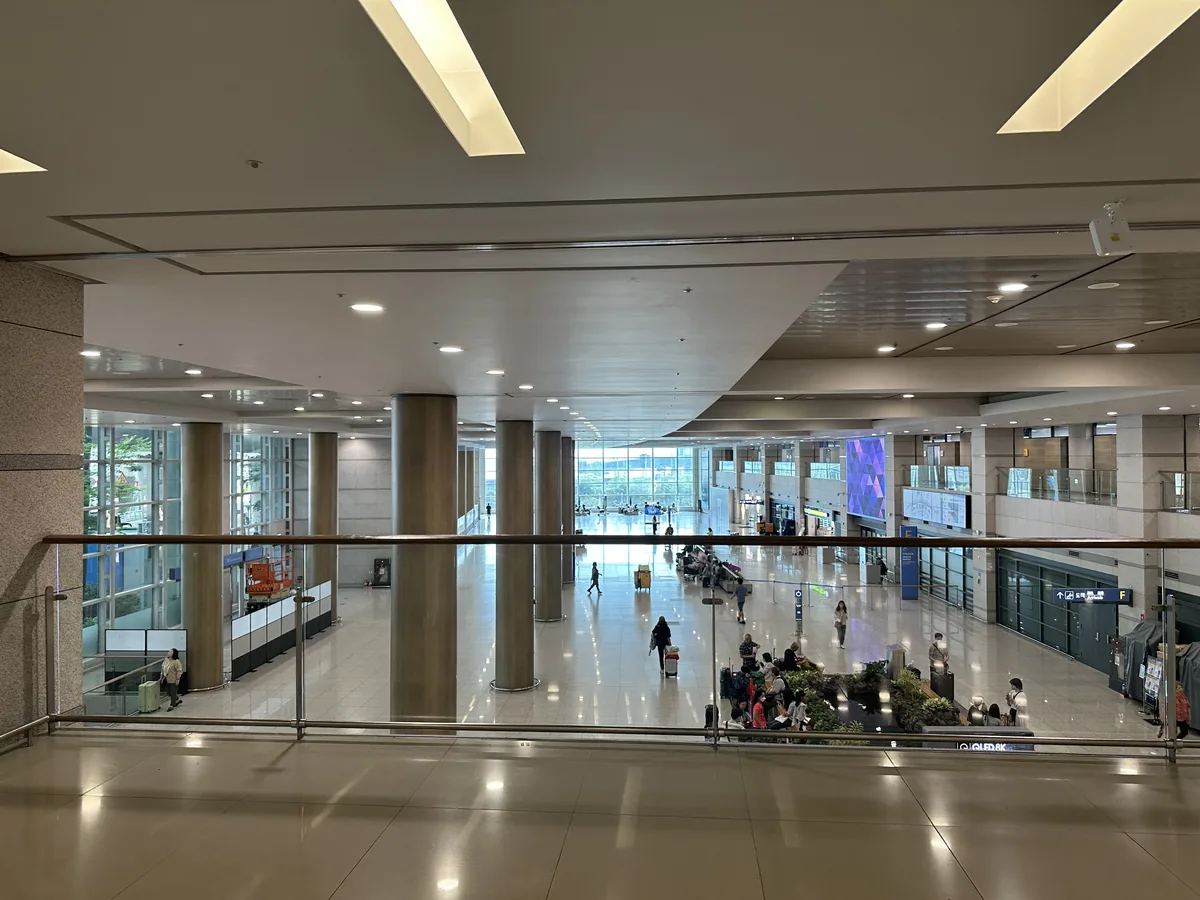

When a friend or relative visits, check their passport nationality, travel purpose and planned stay to identify one of three groups: visa-free and K-ETA exempt, visa-free but K-ETA required, or visa required. Visitors who are required to make an arrival declaration can file the free e-Arrival Card starting three days before arrival (KST). Exemptions include valid Korean Residence Card holders and K-ETA holders entering without a visa; check the official list for the entry status. This guide explains it all from the host’s side.
Agree on the visit details before booking
- Check the actual trip. Use the guest’s nationality, passport, purpose and planned stay to check the official visa and K-ETA rules before buying tickets.
- Share the accommodation details. Send the Korean address, postcode and a reachable contact number. Confirm that the guest can stay under your housing agreement or booking.
- Review an existing K-ETA. Check its expiry and passport details, and update changed travel information on the official site before entering Korea.
- Check the arrival declaration separately. Use the official exemption list for the guest’s entry status; holding a K-ETA while entering with a visa does not remove the declaration requirement.
- Set an arrival plan. Agree on a meeting place, a way to contact each other and a payment fallback. Check the last transport departure if the flight arrives late.
Host preparation added 14 October 2026. The K-ETA repeat-entry update duty and visa-holder arrival-card exception were checked against official guides on that date. Other visa, transport and housing details retain their earlier check dates.
When a friend or relative plans to visit, first check the entry requirements for their nationality, travel purpose and length of stay. Then send them your Korean address and agree on an airport transfer and a way to contact you. This guide covers the practical steps you can help with as their host.
First, find out which group your friend is in
Before you research anything else, establish this. It determines whether you are sending documents to another country or just sending a link.
Group 1: Visa-free, and currently exempt from K-ETA. Check that the trip qualifies for visa-free entry and the K-ETA exemption. This covers a large share of the passports most likely to be visiting you.
If your guests plan to stay close to their limit, they can check a safe exit date with the 90-day stay calculator.
Group 2: Visa-free, but K-ETA required. They apply online before boarding, pay a fee, and get a multi-year authorization.
Group 3: A visa is required. They apply at the Korean embassy or consulate responsible for their place of residence; check whether host documents are required.
Start with the guest’s passport nationality, then check the purpose and length of the visit. A visa-free allowance or K-ETA approval does not authorize every kind of activity or an unlimited stay.
There’s no shortcut around checking this properly, because the rules are country-specific and they change. The guide to Korea’s government websites covers which official site answers which question; in short, the visa portal handles visa questions and the K-ETA site tells you whether K-ETA applies. Both end in .go.kr. Anything that doesn’t isn’t the government.
Group 1: visa-free and exempt from K-ETA
This is the easiest case and also the one where your friend is most likely to be misinformed, because plenty of travel sites still say K-ETA is mandatory.
The Ministry of Justice introduced a temporary K-ETA exemption to support tourism, and has extended it repeatedly. The current extension runs from 1 January 2026 through 31 December 2026, and it applies to the countries already covered, the United States included. Korean embassies and consulates have published this consistently.
Two things worth knowing that almost nothing in English mentions:
The exemption is checkable. If your friend starts a K-ETA application, the system shows an exemption notice when it recognizes their nationality. So there is a way to verify their own status without trusting a blog.
There is a separate age-based exemption. Among nationals of visa-free countries, travelers aged 17 or under and 65 or over are outside the K-ETA requirement regardless of the country-based measure. This one is easy to miss, and it matters if you are hosting a parent or bringing a younger sibling.
Warning worth passing on directly: there is active misinformation circulating that US citizens need K-ETA from January 2026. Korean embassy notices say the opposite. If your friend has read otherwise, send them to the official notice rather than arguing about it.
For travel in 2027 or later: recheck the official K-ETA notice for the planned entry date. The exemption period described here ends on 31 December 2026; do not assume it applies to a later trip.
K-ETA and the e-Arrival Card
This is how the two systems connect.
The official e-Arrival Card guide describes a free online arrival declaration, available from three days before arrival (KST). Check the official exemption list first. These points were checked on 6 October 2026.
A valid K-ETA exempts a guest entering without a visa from the arrival card. The official declaration guide says that K-ETA holders entering with a visa must still complete it. Exception checked 14 October 2026.
Put those two facts together and an exempt traveler has an actual choice:
Option A: skip K-ETA, submit the e-Arrival Card. Free. Done shortly before each trip. Repeated every single visit.
Option B: apply for K-ETA voluntarily, skip the arrival card. Embassy notices confirm that exempt nationals may still apply if they want the benefits, and that the application fee applies. For current applications, it is valid for three years or until passport expiry, whichever comes first. Changed travel information must be updated before entry.
The better choice depends on your friend:
- One visit, probably not returning soon → Option A. Do not pay for something you use once.
- Someone who will come back: a parent visiting yearly, a partner doing long-distance, a colleague on repeat business trips → Option B is worth pricing out. Check the authorization and update changed travel information before each entry; approval does not guarantee admission.
No competing guide frames this as a decision, because most of them have not noticed that the two systems interact.
One caution. Being eligible to apply for K-ETA is different from holding a valid K-ETA. Other arrival-card exemptions also exist, including for Korean Residence Card holders. Check the official list above for your guest’s situation.
Group 2: visa-free but K-ETA required
If your friend’s nationality is not covered by the temporary exemption, K-ETA is the step before boarding, not on arrival, not at the airport. Airlines check it.
What you need to tell them:
- Apply on the official K-ETA site or app, and nowhere else. Third-party agencies charge markups for filling in the same form.
- Apply well before departure. Most applications are approved quickly, but some take considerably longer, and there is no way to rush one at the gate.
- Approval is not a guarantee of entry. The immigration officer at the border makes the final decision. This is standard everywhere, but it surprises people who assume an approval is a boarding pass.
- Once approved, it covers multiple entries during its validity, so the cost is spread across trips.
- When entering without a visa on a valid K-ETA, they skip the arrival card.
The most common failure here is not rejection. It is leaving the application until two days before the flight.
Group 3: Preparing for a visa application
This is where being the host stops being advisory and becomes administrative.
Check the embassy or consulate with jurisdiction over where your guest lives. Follow its instructions for the visit purpose, required host documents and submission channel. Prepare and send documents only after confirming that checklist.
That reverses what most people expect, and it drives the whole timeline.
The relevant category is the short-term visit visa (C-3), which covers tourism, family visits, visiting friends, short business trips, medical visits, and attending events or conferences. Within it there are sub-categories, and a family visit is handled differently from general tourism.
What you send from Korea
The specific list depends on the consulate, and consulate requirements differ enough that you must read the page for your friend’s consulate rather than a general guide. But the pattern is consistent, and one item is confirmed and non-negotiable:
Your residence card, both sides. For a family-visit application where the person in Korea is a long-term foreign resident, consulates require a copy of your valid residence card or overseas-Korean resident card, front and back. This is stated explicitly in official consulate guidance. If you haven’t yet received your card, see the guide to getting your residence card, because the visa timeline depends on yours existing first.
Beyond that, the pattern typically includes:
- A letter of invitation from you. There is no single mandatory format; some consulates publish a template, others accept your own. What matters is that it states the specific dates, the reason for the visit, the relationship, and where your guest will stay.
- Proof of your relationship, for family applications.
- Proof of accommodation: for a friend staying with you, confirmation of where they will be staying.
- A return flight booking.
- Evidence of how the trip is funded, which may be theirs or yours depending on the case.
Some invitation scenarios also involve additional guarantee documents. If a consulate asks for one, read what you are signing before you sign it; a guarantee is a commitment, not a formality, and it is worth asking the consulate directly what it obligates you to.
Deliberately not listed here: visa fees and consulate-specific document checklists. Both vary by country and are revised without notice. Sending your friend to their own consulate’s page is more useful than any general table.
Why applications get refused
The common thread in refusals is not paperwork quality. It is that the application does not clearly establish the visit is temporary. Vague dates, no return booking, an invitation letter that reads like a form, no clear picture of who is paying: these read as risk. Specificity is the fix. Real dates, a real itinerary, a real explanation of the relationship.
A realistic timeline
Work backwards from the flight.
Eight weeks out. Establish which group your friend is in. If Group 3, find their consulate’s page and read the actual requirements.
Six weeks out. If a visa is needed, send your documents. Processing can take three to four weeks and longer in peak season or if the consulate requests additions.
Four weeks out. Flights and accommodation confirmed. If your friend is Group 2, K-ETA applied for now rather than later.
Two weeks out. Talk through what they should set up before flying: payment, phone, transit. Details below.
Three days out. If they are submitting the e-Arrival Card, this is the window. Not earlier.
Arrival day. See below.
For Groups 1 and 2 you can compress all of this considerably. For Group 3 the six-week mark is not padding.
Send a meeting point your visitor can find
- Confirm the flight’s arrival terminal before setting out.
- Agree on a public arrivals-hall meeting point and share the exit number. A flight’s landing time is not the time the passenger clears immigration and baggage collection.
- Send your Korean address and a backup transport route in case the flight or pickup is delayed.
If your visitor will take the train, explain whether they need AREX Express or all-stop. The airport transport guide compares the services and shows the airport boarding process.
Arrival day
Your guest lands, and the friction is all in the first two hours.
Do not plan to meet them at the gate. Arrivals means the arrivals hall, after immigration and baggage. Immigration queues at Incheon vary from fifteen minutes to well over an hour depending on the hour and the flight bank.
Decide in advance how they get to the city. If you’re collecting them, fine. If not, brief them properly, because a jet-lagged person improvising airport transport at 11pm makes expensive choices. The guide on getting from Incheon Airport to Seoul covers the actual options and what each costs.
Have their phone working before they leave the airport. A guest without data can’t find you, can’t call you, and can’t use a map. Handle this with a SIM or eSIM sorted out in advance; see the guide to SIM cards and eSIMs. An eSIM they activate before boarding is the simplest option.
Get them a transit card at the airport, or give them one. If you have a spare T-money card in a drawer, that’s an easy thing to hand over. Otherwise they buy one at a convenience store. The T-money guide covers it, and Korea’s transit passes is worth reading if they’ll be riding constantly.
Small amount of Korean cash. Carry a cash fallback if a card is rejected. If your guest plans to use a WOWPASS machine, compare its displayed exchange rate, credited amount and fees, and confirm that the chosen machine accepts the currency they are bringing.
Visitor products worth checking together
This is the part hosts get wrong, and it costs the guest money. Several Korean products are restricted to short-term visitors. You lost access to them the moment you became a resident, but your friend has it, and only while they are here.
Tax refunds on shopping. Short-term visitors can reclaim value-added tax on qualifying purchases. As a resident, you cannot. Tell your friend this before they shop, because the refund depends on how the purchase is handled at the point of sale. Discovering it at the airport is discovering it too late.
The KORAIL PASS. Korail sells an unlimited-travel rail pass, and your visiting friend is exactly the intended customer. Worth pricing against individual tickets if they are doing several long-distance trips.
Confirm the current product with Korail before paying. If you hold a Korean residence card, ask about your own eligibility. Check the exact covered trains and current seat-reservation or standing-travel conditions; a pass alone does not reserve a seat. Ordinary refunds have a deadline before the start date. Article 10(4) in Korail’s published April 2025 terms contains a narrow full-refund exception when a complete service suspension makes the pass unusable. The current product page could not be retrieved on 14 October 2026, so this update does not certify the full current offer. See the KORAIL PASS guide for the dated details and limitation.
Visitor-only prepaid cards. WOWPASS is issued to foreign nationals only, on a passport, from a machine: currency exchange, card payment and transit on one piece of plastic. Useful for a guest arriving with foreign cash, with two catches you should warn them about: it cannot pay online at all, and the shopping balance and the transit balance are separate. The WOWPASS guide covers the fees, the limits and the airport machines that are easy to miss.
Some apps and websites require a supported Korean identity or payment method, but visitor access differs by service. Check the actual checkout requirements before agreeing to order for your guest. Baemin has announced visitor-friendly options, as described in the delivery-app guide. WOWPASS cannot pay online or in mobile apps; arrange another supported method or agree on reimbursement if you help.
The roundup of useful apps for foreigners in Korea covers which ones actually work without a Korean identity number.
Practical preparations for your guests
Your accommodation may have rules. Company housing, university dormitories and some officetel buildings restrict overnight guests or require notification. Check your own contract before you promise anyone a bed. This is a lease question, not an immigration one.
Plan fewer things than you want to. Your friend has jet lag and you have a job. The standard host mistake is scheduling six days of activities and then spending them exhausted. Two anchored plans a day is plenty.
Feed them somewhere ordinary early on. The most memorable meals your guest has will not be the expensive ones. Traditional markets are the highest-return, lowest-cost outing available; see Seoul’s traditional markets. Bring cash for these.
Save the emergency numbers to their phone, not just yours. If you get separated and their phone works but yours doesn’t, that matters. The emergency numbers guide has the list, including the interpretation lines.
Write down your address in Korean. Give it to them on paper and in a message. A taxi driver needs the Korean address, and a guest who cannot pronounce it and has no data is stuck.
FAQ
Does my friend need a visa to visit me in Korea? Check their nationality, purpose and planned length of stay. Many nationalities enter visa-free; others need a short-term visit visa applied for at a Korean embassy or consulate with jurisdiction over their place of residence. Check the official visa portal for their specific nationality.
Is K-ETA required in 2026? Not for nationals of the countries under the Ministry of Justice’s temporary exemption, which runs through 31 December 2026 and includes the United States. Nationals of visa-free countries not covered by that measure need it unless another exemption, such as age, applies. Recheck the official notice for trips after 2026.
I read that US citizens need K-ETA from January 2026. Is that true? No. Korean embassy notices confirm the exemption was extended through the end of 2026 with the US included. That claim has circulated widely and is incorrect.
Does my friend need to submit the e-Arrival Card? Check the exemption list linked above. An ordinary visa-free tourist without a valid K-ETA generally needs an arrival declaration; Residence Card holders and other listed groups are exempt.
Should an exempt guest apply voluntarily? Compare the fee with the convenience for their own trips. For current applications, validity ends after three years or at passport expiry, whichever comes first. Changed travel information still needs updating before entry, and visa entry has a separate arrival-card rule.
Are there age exemptions for K-ETA? Yes. Among nationals of visa-free countries, travelers aged 17 or under and 65 or over are outside the K-ETA requirement. Check whether another arrival-card exemption applies before submitting it.
Can I apply for my friend’s visa here in Korea? No. Short-term visit visa applications are made at the Korean embassy or consulate with jurisdiction over where your friend lives. You prepare supporting documents in Korea and send them.
What do I have to provide as the host? For a family visit where you are a long-term foreign resident, a copy of both sides of your residence card is required. Beyond that, expect an invitation letter with specific dates and purpose, proof of relationship for family cases, accommodation details and a return booking. Requirements vary by consulate; read your friend’s consulate’s page.
How long does a visa take? Allow three to four weeks for processing, and longer in peak periods or if the consulate asks for additional documents. Starting six weeks before the flight is realistic; four is tight.
How long can my friend stay? Visa-free stay periods vary by nationality under the relevant agreement, and a short-term visit visa is capped at 90 days. Both are specific to the passport, so check rather than assume.
Can my friend stay at my apartment? Immigration does not require you to report an ordinary guest. Your lease might, though: company housing and dormitories often restrict overnight visitors. Check your own contract.
Can my friend get a tax refund on shopping? Short-term visitors can reclaim VAT on qualifying purchases. Tell them before they shop, since it depends on how the sale is processed. You, as a resident, cannot.
Can a visiting guest order delivery food? It depends on the app and its accepted phone and payment methods. Check the delivery-app guide and the actual checkout screen. WOWPASS cannot pay in a delivery app; use a supported alternative or agree how to reimburse a host who orders.
Should my friend bring cash or just cards? Mostly cards: Korea is a card country. But some cash is worth carrying for market stalls, street food and older shopping arcades.
Source review. On September 24, 2026 an AI-assisted check went back through the official sources linked in this guide (except the e-Arrival Card site and HiKorea, which were not checked in that September review) and confirmed each still resolves to the same official page. Report corrections to hello@90dayskorea.com.
Send a short arrival note your guest can keep offline
Put the accommodation’s Korean address, postcode, a reachable contact number, the agreed meeting point and a transport fallback in one message. Ask the guest to save it before departure. Keep copies of passports or financial documents out of a general family or group chat.
Agree who will check the flight and terminal on arrival day. If you cannot meet the guest, explain where to go after customs and how to contact you. Avoid using only “outside arrivals” as a meeting instruction when you can agree on a named location.
Check entry authorization and the arrival declaration as separate tasks. The official e-Arrival Card guide says filing is free and opens three days before arrival based on Korean Standard Time. Its issue number is emailed to the declarant. Confirm whether the guest is required to declare before starting the form; this paragraph doesn’t replace the official exemption list.
Ask the guest to keep the final declaration email or issue number with the travel records if they file. This is a recordkeeping suggestion, not a claim that a printed declaration is mandatory. If dates or accommodation details change, use the official checking/editing instructions for the current record.
At home, confirm keys, building access, permitted guests and where luggage can be kept. Discuss any constraints in your rental agreement before promising an overnight stay. Arrival paperwork doesn’t resolve the housing agreement between you and your landlord.
Targeted source check: October 26, 2026. The e-Arrival Card guide supports the stated filing window, fee and emailed issue number. Guest coordination and document-handling suggestions are editorial advice. No individual visa, K-ETA eligibility, exemption or admission decision was verified.
Related guides
Official resources
Links marked (Korean) open Korean-language pages; your browser’s built-in translation can show most of them in English.
- Korea Visa Portal: https://www.visa.go.kr/?LANG_TYPE=EN : official Korea Visa Portal for visa information and online visa applications
- K-ETA: https://www.k-eta.go.kr
- e-Arrival Card: https://www.e-arrivalcard.go.kr
- HiKorea (immigration services in Korea): https://www.hikorea.go.kr (Korean may appear)
- Immigration Contact Center: 1345 (from Korea), +82-1345 (from abroad)
- Korea Travel Helpline: 1330
Only addresses ending in .go.kr are Korean government sites.
New here? Start with the guide to Korea’s government websites, or browse all guides.