
Last updated: October 21, 2026 (editorial wording and formatting updated; facts not rechecked in full). First edition: October 19, 2026 (storage and collection checks).
Facts last checked: October 19, 2026: cited official storage guidance; individual lockers, counters and payment methods were not tested.
Originally published: October 19, 2026: first publication.
If you need to leave a suitcase in Seoul after checkout, choose storage near the place where you will collect it, not simply the first locker you see. Before paying, check that the bag fits, that you can complete the payment and opening process, and that you can return before access closes.
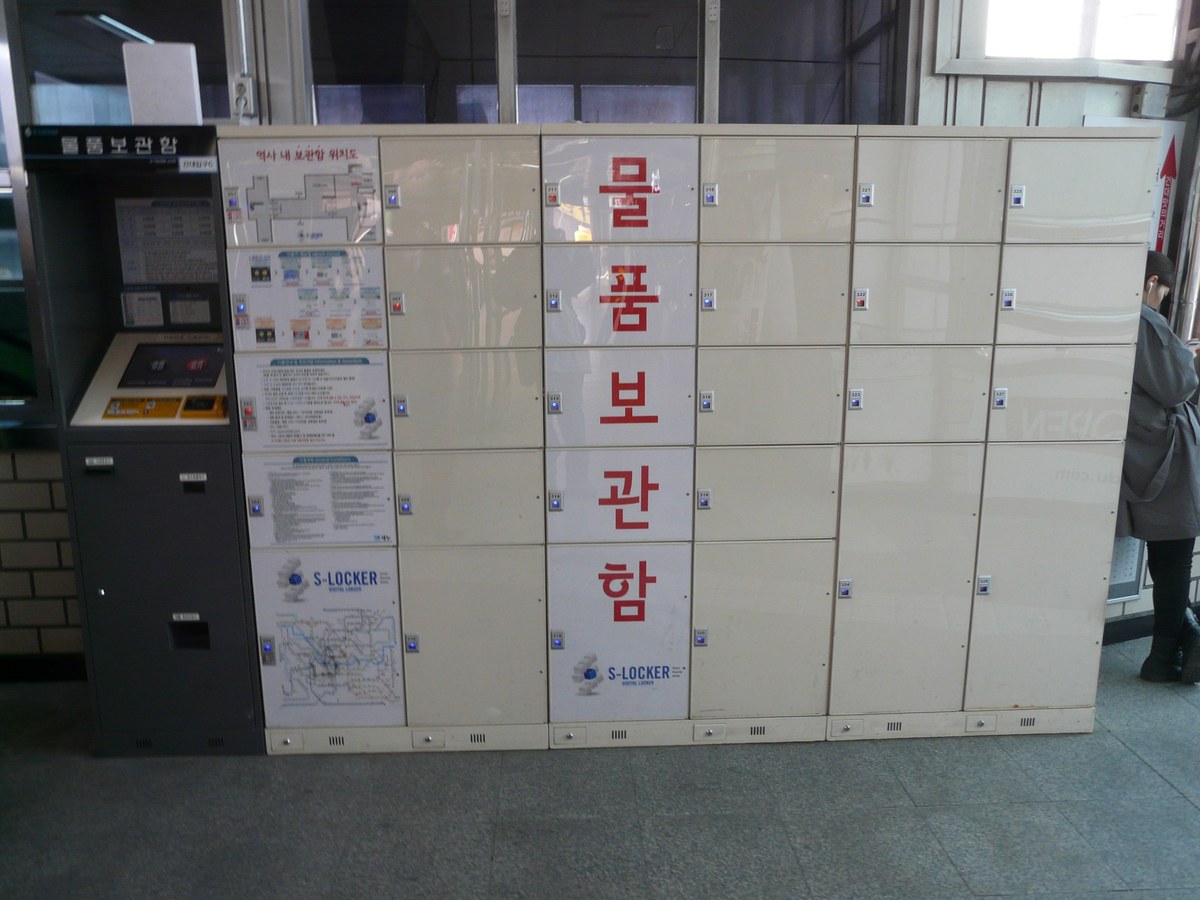
Access to a subway locker depends on the station’s opening hours. You may be unable to reach your bag while the entrance is closed, so plan collection around your departure time as well as the storage price.
T-Locker, T-Luggage, or your accommodation?
T-Locker (또타라커) is self-service storage in subway stations. T-Luggage (또타러기지) is a staffed luggage service. The similar names can cause confusion: a locker and a counter at the same station don’t necessarily have the same hours, prices, or collection procedure.
Start with a locker for a short stop if an available compartment fits your bag and its instructions work with your phone and payment method. Consider a staffed counter if you need help explaining your collection time or checking whether an awkwardly shaped bag is accepted. If you’re returning to your hotel anyway, ask reception about storage before check-in or after checkout. Don’t assume it’s included.
The T-Luggage operator’s website (Korean) lists counters at stations including Seoul Station, Hongik University, Myeongdong, and Jongno 3-ga. Check the selected branch before traveling there; a station name alone does not identify the counter’s entrance.
Work backward from your train or flight
Write down your departure point and the time you need to collect your bag. Allow time to locate the locker bank again, resolve an opening problem, and reach the correct platform or airport service. Avoid planning collection at the last possible minute.
T-Locker’s current website says storage and collection are available only during subway operating hours. Use the access hours posted for your particular locker and station, rather than assuming a late train means every entrance remains available.
For staffed storage, ask about the counter’s collection deadline separately. The T-Luggage website gives different opening times in its branch and booking sections, so confirm the time for your booking instead of relying on a general opening hour.
At a large station, record the subway line, floor, nearby exit number, and locker-bank name. Photograph the surroundings without capturing someone else’s access code. Check whether returning from the street requires passing through ticket gates. Your own photo can be more useful than a map pin that marks the whole station.
Check size and price at the actual locker
Measure your suitcase with its wheels, side handle, and any expanded section included. A suitcase’s advertised inch size doesn’t prove it will fit a compartment. Follow the operator’s procedure for checking fit; don’t force the door or trap a strap in it.
As a planning reference, Seoul’s official storage guide lists T-Locker’s first four hours at ₩2,200, ₩3,300, and ₩4,400 for small, medium, and large lockers on weekdays. Its weekend prices are ₩3,100, ₩4,600, and ₩6,100. Listed hourly additions are ₩500, ₩800, and ₩1,000 respectively.
These are reference rates, not a quote for every locker. Read the selected unit’s payment screen for the applicable charge, extra-time rules, and collection conditions. Confirm whether opening the door ends the rental before storing anything you may want during the day.
For staffed T-Luggage, the operator lists a small bag’s four-hour storage from ₩3,000 on weekdays and ₩4,000 on weekends, with ₩1,000 per additional hour. Larger bags cost more. Ask for the total for your planned collection time rather than comparing only the starting prices.
Don’t lock away the phone you need to reopen it
The current T-Locker site describes a QR-based walk-up process and a one-time password for collection. It also advertises advance reservations through the app. Seoul’s guide distinguishes newer and older lockers, whose instructions may differ. Follow the instructions on your locker rather than assuming a video of another machine applies.
Keep your phone, passport, payment card, medication, and anything needed for the rest of your trip with you. Charge the phone before leaving and save the storage reference and support details somewhere you can reach if the phone fails.
A card logo or a list of Korean payment apps does not confirm that your overseas-issued card will work in that particular transaction. Check the available options before committing. If payment or identity verification stops you, use the operator’s support or choose another service; do not repeatedly pay without first checking whether a rental was created.
Before walking away, confirm that the correct door is closed and that the service shows your storage as active. Keep the confirmation private. A public photo of an opening code can give someone else access to your belongings.
Read the service’s excluded-items rules before handing over a bag. T-Luggage’s published terms include electronics and laptops among items it may refuse. Ask the counter about any item covered by its restrictions before booking.
If the lockers are full or the payment fails
Look for another locker bank only if it still fits your return route. Otherwise, ask a staffed storage counter or your accommodation. Moving a heavy suitcase across town to save a small amount may leave you with a harder collection trip.
One separate option near Anguk is Luggage Lounge Anguk Locker. Visit Seoul lists it at 82 Yulgok-ro, near Anguk Station Exit 4, with daily hours of 05:00–24:00. The listing says no app is required, payment is by card at the kiosk, and cash is not accepted. Check current availability, prices and card acceptance directly before making the trip.
If a door will not open, note the locker number, displayed message, and rental reference, then contact the support shown on that unit. Do not force it. If you are close to missing transport, tell support your departure time, but do not assume an immediate on-site response.
Korean phrases to show staff
- 이 근처에 물품보관함이 있나요?
Is there a luggage locker nearby? - 이 캐리어가 들어가는 보관함이 있나요?
Is there a locker that fits this suitcase? - 오늘 몇 시까지 짐을 찾을 수 있나요?
Until what time can I collect my bag today? - 해외에서 발급된 카드로 결제할 수 있나요?
Can I pay with a card issued overseas? - 결제했는데 보관함 문이 안 열려요.
I paid, but the locker door will not open.
Before leaving, make one final check: you know the collection location and deadline, have kept the items needed to reopen the locker, and can reach your next departure with time to spare. For the onward trip, see the Incheon Airport–Seoul transport guide.
Official information checked on October 19, 2026. Prices, access hours, and payment methods can change; confirm the terms shown for the specific service you use.